

Quick answer: The Duckworth-Lewis-Stern (DLS) method adjusts the target score in limited-overs cricket when rain interrupts play. It recalculates the resources remaining for both teams — the combination of overs left and wickets in hand — and uses a mathematical table to set a fair revised target that reflects the game state at the interruption. It does not favour the team batting second; it simply balances the "resources" each side had available.
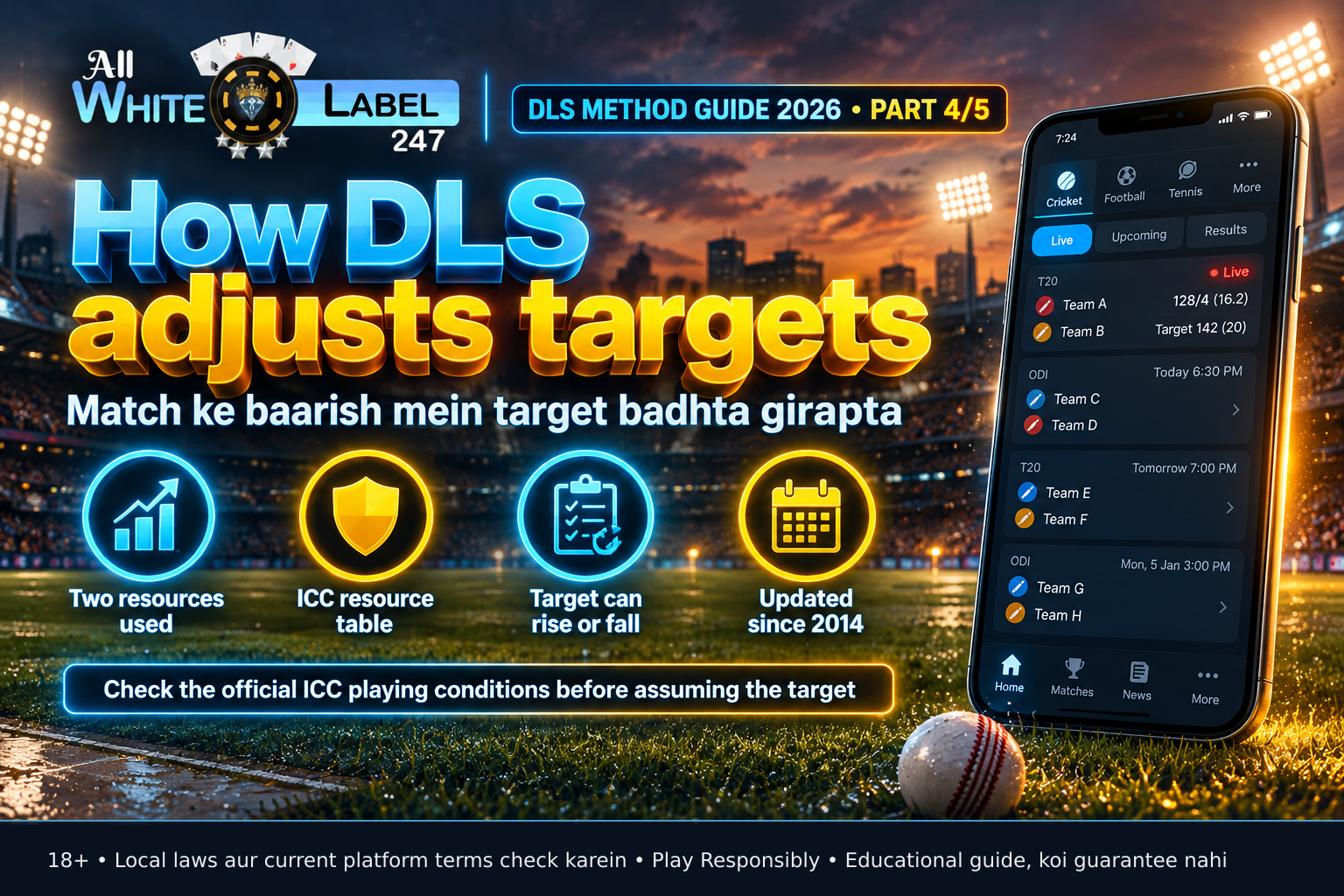
Key takeaways: – DLS uses two resources: overs remaining and wickets in hand. – The method consults a pre-calculated resource table to assign a percentage to each game state. – The revised target is based on the difference in resources between the two innings. – If rain stops play early, the target for the second team can go up or down depending on how many overs were lost. – The method has been updated as the DLS method since 2014, replacing the older Duckworth-Lewis system.
Imagine this: You have your phone in hand, the match is halfway through the second innings, and suddenly the sky opens up. Rain stops play. When the players come back, the scoreboard shows a new target — one that feels higher or lower than the original. That is the DLS method at work. It is not magic, and it is not a guess. It is a resource-based calculation that every cricket follower should understand.
What it is and why it matters
In a standard 50-over-per-side match, each team starts with two resources: the full complement of 50 overs and the full complement of 10 wickets. As the innings progresses, those resources get used up. Hitting boundaries and taking risks uses up overs; losing wickets also reduces the resource pool because fewer wickets mean fewer scoring options later.
When rain interrupts, the game state changes. The team batting second might have fewer overs left, or might have lost more wickets than expected. The DLS method looks at the percentage of resources each team had at the point of interruption and at the resumption. The revised target is then set so that the team batting second has a comparable chance to the original target — no more, no less.
Why does this matter? Because without a structured method, targets could be set subjectively, leading to disputes, accusations of unfair advantage, or matches being abandoned without a result. DLS removes the guesswork. It is the standard adopted by the International Cricket Council (ICC) and used in almost all professional limited-overs cricket across the world.
How the calculation works (worked example)
Let us walk through a hypothetical scenario. Suppose Team A bats first in a 50-over match and scores 250 runs. Then, rain interrupts during Team B’s chase. When play resumes, Team B has 30 overs remaining and has lost 4 wickets.
Step 1: Check the resource percentages
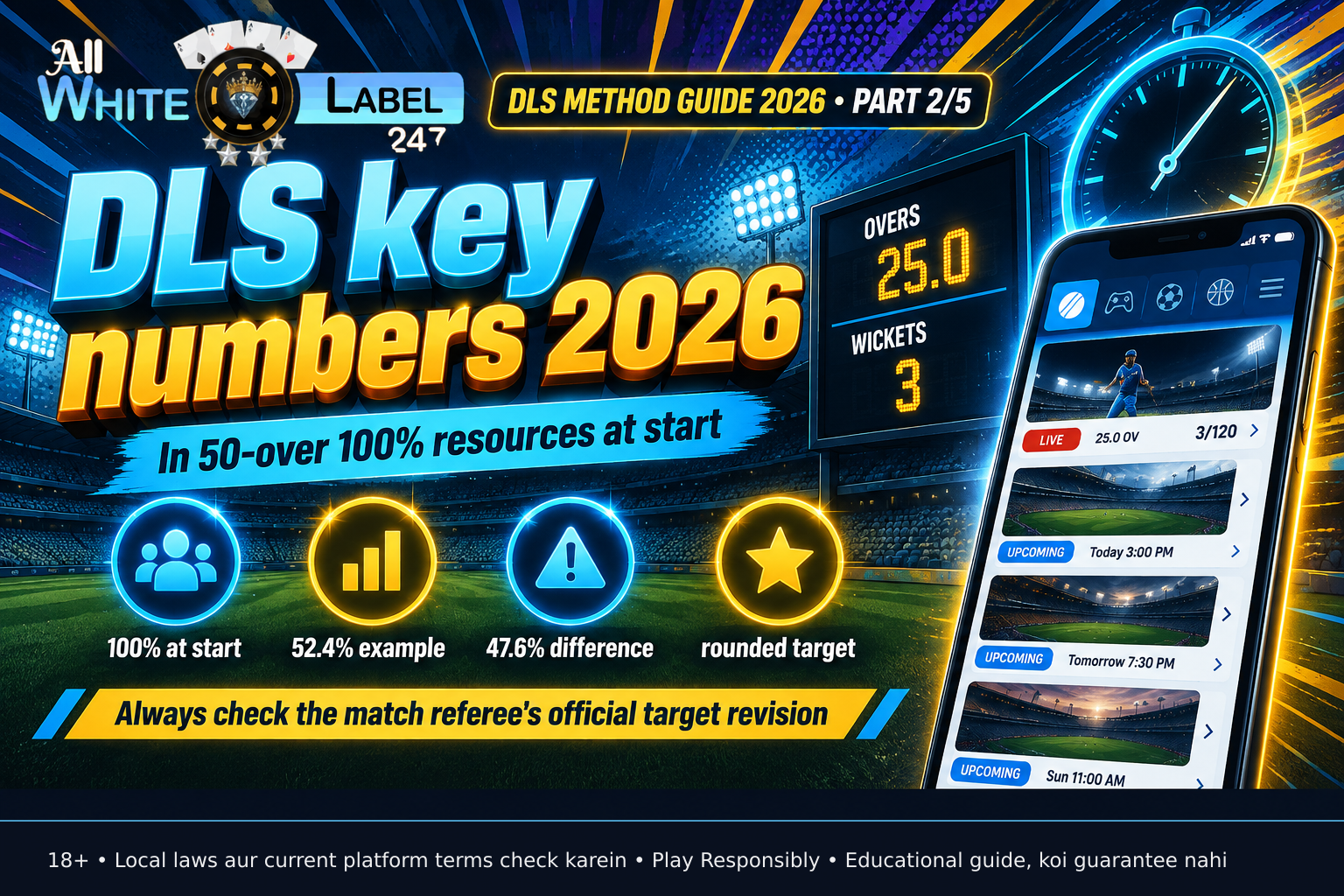
Consult the DLS resource table (officially published by the ICC). At the start of a 50-over innings, the resource percentage is 100%. As overs are bowled and wickets fall, that percentage drops.
For our example:
- Team A’s innings (full 50 overs, 10 wickets lost by the end): resources used = 100%. Resources remaining = 0%.
- Team B’s innings at interruption: 30 overs remaining, 4 wickets lost. According to the DLS table, a team with 30 overs and 4 wickets wicket has approximately 52.4% resources remaining. (The exact figure depends on the specific table version; the ICC updates these periodically.)
Step 2: Calculate the resource difference
Team A had 100% resources for their full innings. Team B, at the stoppage, had 52.4% resources. The difference is 47.6%. This percentage represents the extra resource Team A had because Team B’s innings was cut short.
Step 3: Apply the par score adjustment
The DLS method calculates a "par score" for the overs Team B has already faced. If Team B had faced, say, 15 overs before the rain, the par score for those 15 overs might be 85 runs (based on the 52.4% resource figure).
If Team B had already scored 80 runs in those 15 overs, they would be 5 runs short of par. To tie the match, they would need to score those 5 runs plus the full revised target from the remaining resources.
Step 4: Set the revised target
The revised target is usually expressed as: Original target + (Resource difference × 1/5) (In 50-over cricket, the factor is approximately 1/5; in T20 the factor is 1/6, reflecting the shorter format.)
Using our numbers: Original target = 250 Resource difference = 47.6% Adjustment = 47.6 ÷ 5 ≈ 9.5 runs
Revised target for Team B = 250 + 10 = 260 runs (rounded to the nearest whole run).
If Team B had instead had more resources left (for example, if rain had interrupted early and they had 45 overs and 2 wickets), the resource percentage would be higher, the difference would be smaller, and the revised target might drop below 250. That is why the method can both raise and lower the target — it all depends on who lost more resources.
Also read: What is a white-label casino platform?
Common misunderstandings
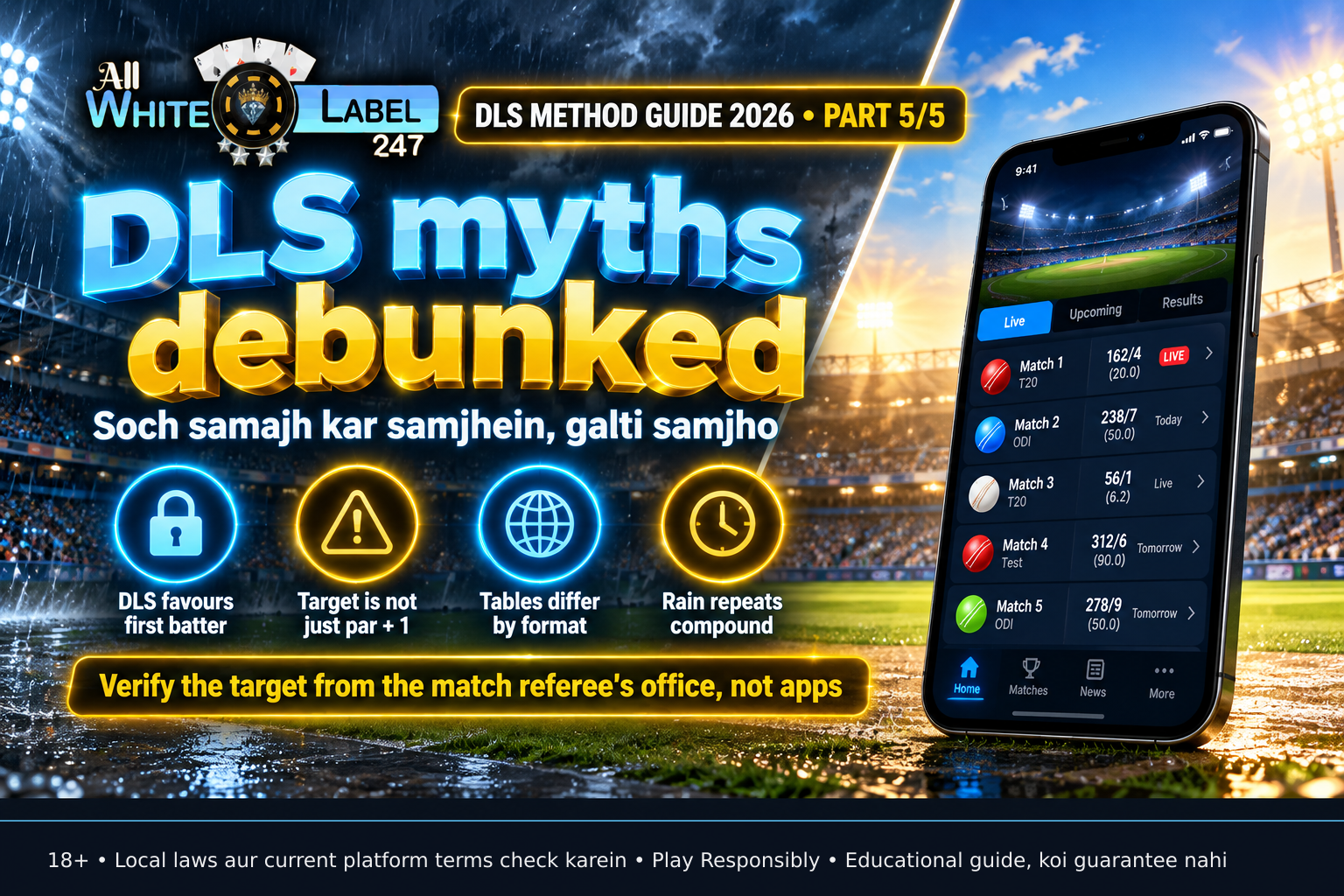
- "DLS favours the team batting second." Not true. The method simply balances resources. If the team batting second has fewer overs or more wickets in hand, their resource percentage drops, and the target usually goes up. If they have more resources left, the target can go down.
- "The target is just the par score plus one." The par score is an intermediate step. The final target also factors in how many resources the team had at the start of their innings versus how many they have left. The formula adds a calculated adjustment based on the resource difference.
- "DLS works the same in every format." The resource tables are different for 50-over (ODI) cricket and T20 cricket. A 10-over-per-side game would use yet another set of percentages. The ICC publishes separate tables for each format.
- "If rain starts again, DLS just repeats." If a second interruption occurs, the recalculations compound. The resource percentages are updated again based on the new overs and wickets at that moment. This is why you sometimes see the target change multiple times in a single match.
Quick checklist: before you follow a DLS-revised match
| What to check | Why it matters |
|---|---|
| Official source | Always verify the target revision from the match referee’s office or the ICC playing conditions page, not from third-party live-score apps that may simplify or round the number. |
| Format matters | Confirm whether the match is 50-over, 20-over, or a other limited-overs variant. The resource tables differ. |
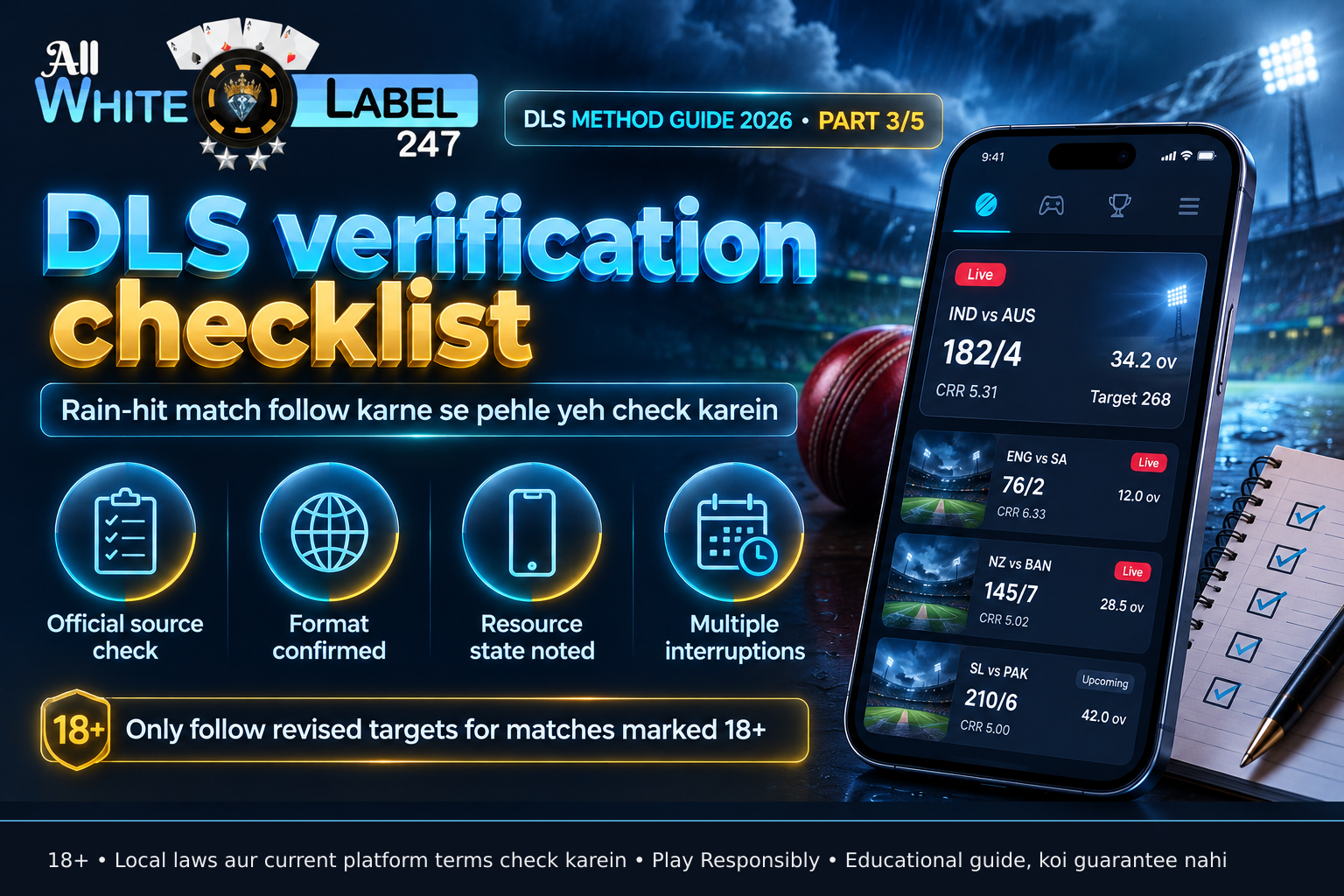
| Resource state | Note the overs remaining and wickets lost at the interruption. This is what the calculation hinges on. |
| Multiple interruptions | If rain falls more than once, the target may be recalculated each time. Check the scoreboard updates for each new revision. |
| Par score vs. target | Remember that the par score is the "tie" score for the overs played so far; the revised target is the total runs needed to win. |
Understanding the DLS method means you stop wondering why the target changed and start seeing how it was calculated. It is a transparent mathematical process — one that depends only on overs and wickets, not on guesswork or favouritism. The next time rain threatens a match, you will know exactly what goes into that new number on the scoreboard.
18+ and play responsibly
Cricket is a sport enjoyed by fans of all ages, but betting on any match should only be done by adults. If you choose to bet, set a budget before the match begins, stick to it, and never chase losses. Remember that the DLS method adjusts targets; it does not predict outcomes. Play within your means, and check your local laws before placing any wager.
Sources consulted:
- International Cricket Council (ICC) Playing Conditions for Men’s ODI Matches, DLS method section (accessed 2026).
- ICC Men’s T20 World Cup 2021: Playing Conditions (resource tables for T20 format).