
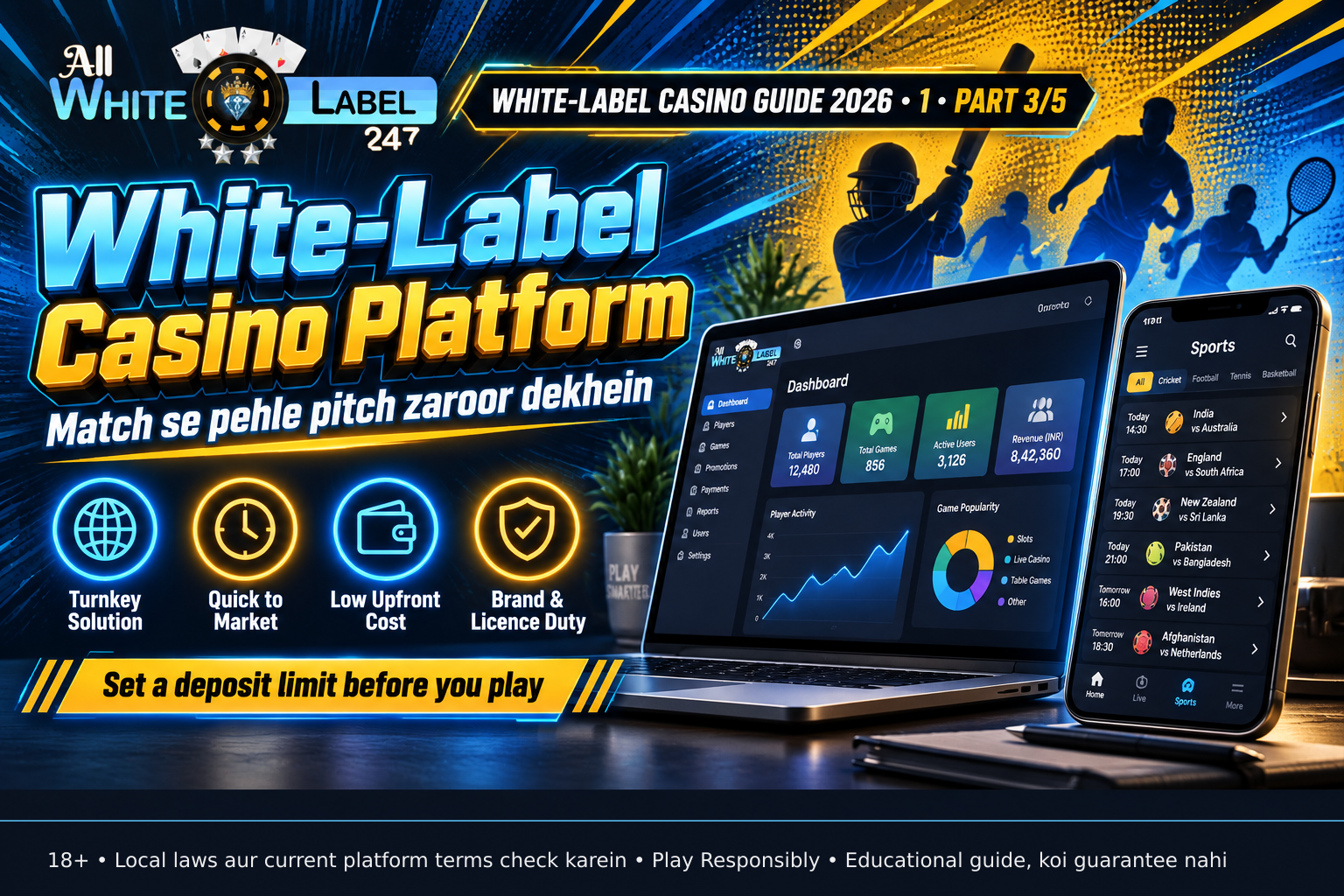
Quick answer: A white-label casino platform is a turnkey solution that lets you launch an online casino, sportsbook, or exchange under your own brand without building the software from scratch. The provider supplies the core product—games, sportsbook or exchange engine, payment gateways, a back-office dashboard, hosting and basic support. You supply the brand, the licence, the player acquisition strategy and the ongoing responsible-gaming and compliance oversight. It differs from a full custom build in time to market (weeks versus months or years), upfront investment (low versus high) and the degree of control you have over the user experience, game selection and data ownership.
Key takeaways
- Turnkey vs custom: White-label gives you a ready product fast; custom gives you total control but at a much higher cost and longer timeline.
- What you own: brand identity, marketing, player relationships, the licence you hold and the responsible-gaming programme you build.
- What the provider owns: the software core, the game library (unless you add your own), the platform infrastructure and the technical support.
- Cost and timeline: Expect a launch in 4–12 weeks for a white-label product; a custom build typically takes 6–24 months and costs several lakhs to crores depending on scope.
- Licence responsibility: The licence is always yours. The provider can help you navigate the application, but the legal onus and compliance monitoring remain with you.
- Responsible gaming: Tools such as self-exclusion, deposit limits and reality checks are your duty to integrate and monitor.
What it is and why it matters
If you are an operator looking to enter the Indian online gaming market—or any regulated jurisdiction—you face a fundamental decision: build the platform yourself or launch on top of someone else’s infrastructure. A white-label casino platform is the "ready-to-go" middle path. It packages the complex stack of software, games and payment integration into a single package you rebrand.
For many new operators, this is the difference between sitting on a development bench for 18 months and accepting real-money bets within a quarter. The trade-off is that you give up some flexibility: the game vault, the look of the cashier, and the depth of data analytics are set by the provider, not by your in-house team.
Understanding what a white-label solution includes, where your responsibilities begin and end, and how it compares to a custom build is essential before you sign any agreement.
Also read: Adding Live Casino to a White-Label Site
Core checklist for evaluating a white-label offer
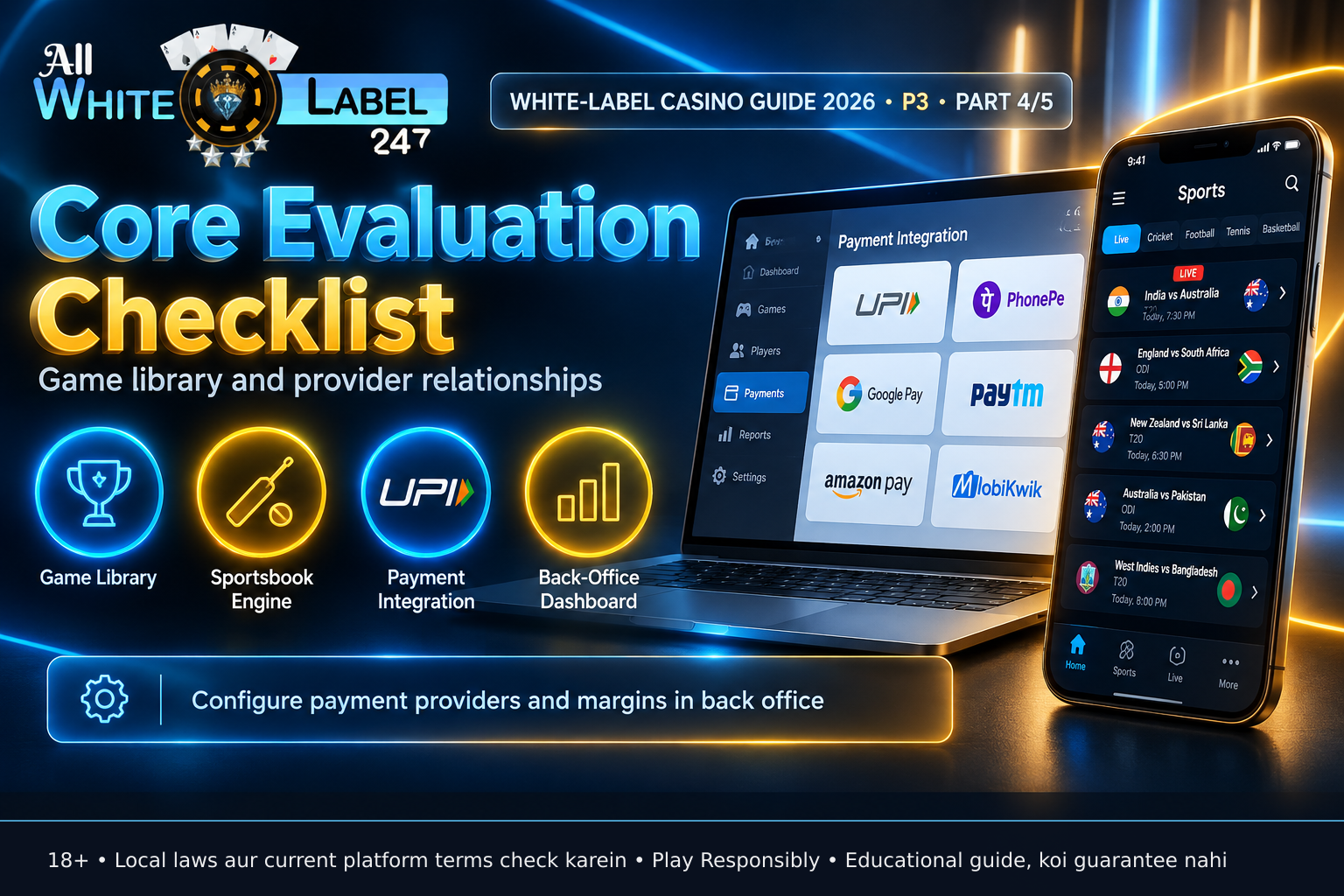
1. Game library and provider relationships
The white-label package typically includes a pre-integrated set of games from multiple studios. You will usually be able to pick and choose which studios’ titles appear on your site, but you cannot add custom or in-house games unless the API supports it. Ask the provider for the current game list, the RTP ranges and whether you can swap titles later without a full rebrand.
2. Sportsbook or exchange engine (if applicable)
If you are launching a sportsbook or betting exchange, the core oddsfeed, risk management and "back/lay" mechanics are provided. You will set the maximum stakes, the margin (house edge) you apply, and the settlement rules for settled bets. The provider does not decide these; they are configured in your back office.
3. Payment integration
The platform will come with a set of pre-connected payment providers—UPI, netbanking, e-wallets and sometimes crypto. You can usually add or remove providers, but each integration may involve onboarding fees or API whitelisting. Verify the settlement cycle (T+1, T+2, etc.) and any minimum withdrawal thresholds the platform imposes.
4. Back-office and reporting dashboard
Your operators will use a dashboard to manage players, view revenue, run reports and configure promotions. The depth of data varies. Some providers offer real-time analytics; others give daily summaries. If you need granular session data for VIP management, confirm what is available before you commit.
5. Hosting, uptime and technical support
The provider usually hosts the site on their infrastructure. Ask about uptime guarantees, DDoS protection and the SLA for technical support. "24/7 support" often means initial response within 24 hours, not instant live chat. Clarify what is covered in the base fee and what is charged as a custom change.
6. Licensing and compliance support
This is not a turnkey licence. The provider may offer guidance on documentation, but the licence application, background checks and ongoing regulatory reporting are your responsibility. In India, this means complying with the Foreign Exchange Management Act (FEMA), state-specific gaming laws and any applicable IT rules. Always send legal points to your regulator or counsel.
7. Responsible-gaming tools
You must integrate and maintain responsible-gaming features. Most white-label providers offer a basic set—self-exclusion, deposit limits, time-outs and reality checks—but the ongoing monitoring, player education and compliance reporting remain your duty. Ensure the tools are configurable to match the regulations of the markets you serve.
White-label vs turnkey vs custom build
| Dimension | White-label | Turnkey | Custom build |
|---|---|---|---|
| Time to launch | 4–12 weeks | 2–6 months | 6–24+ months |
| Upfront cost | Low to moderate (set-up fee + revenue share) | Moderate to high (setup + integration) | High (development team, infrastructure) |
| Control over UX | Limited to config options provided | Moderate (some branding freedom) | Full control |
| Game selection | Provider’s vault, configurable | Provider’s vault, some curation | You build or licence every title |
| Licence responsibility | Entirely yours | Entirely yours | Entirely yours |
| Risk | Lower technical risk, higher dependency | Lower technical risk, moderate dependency | High technical risk, full ownership |
| Scalability | Easy to add markets or games within provider limits | Similar to white-label, varies by contract | You scale on your infrastructure |
Also read: AllWhiteLabel247: The Complete White Label Sports Betting Platform for Modern Gaming Businesses
Launch sequence for a white-label casino
- Define your brand and target market – Name, logo, colour palette, and the jurisdictions you plan to serve.
- Select a provider – Compare three to five white-label operators on game library, payment partners, SLA and cost structure.
- Sign the agreement and pay the set-up fee – This typically includes the initial game integration, basic branding skins and a first-month hosting fee.
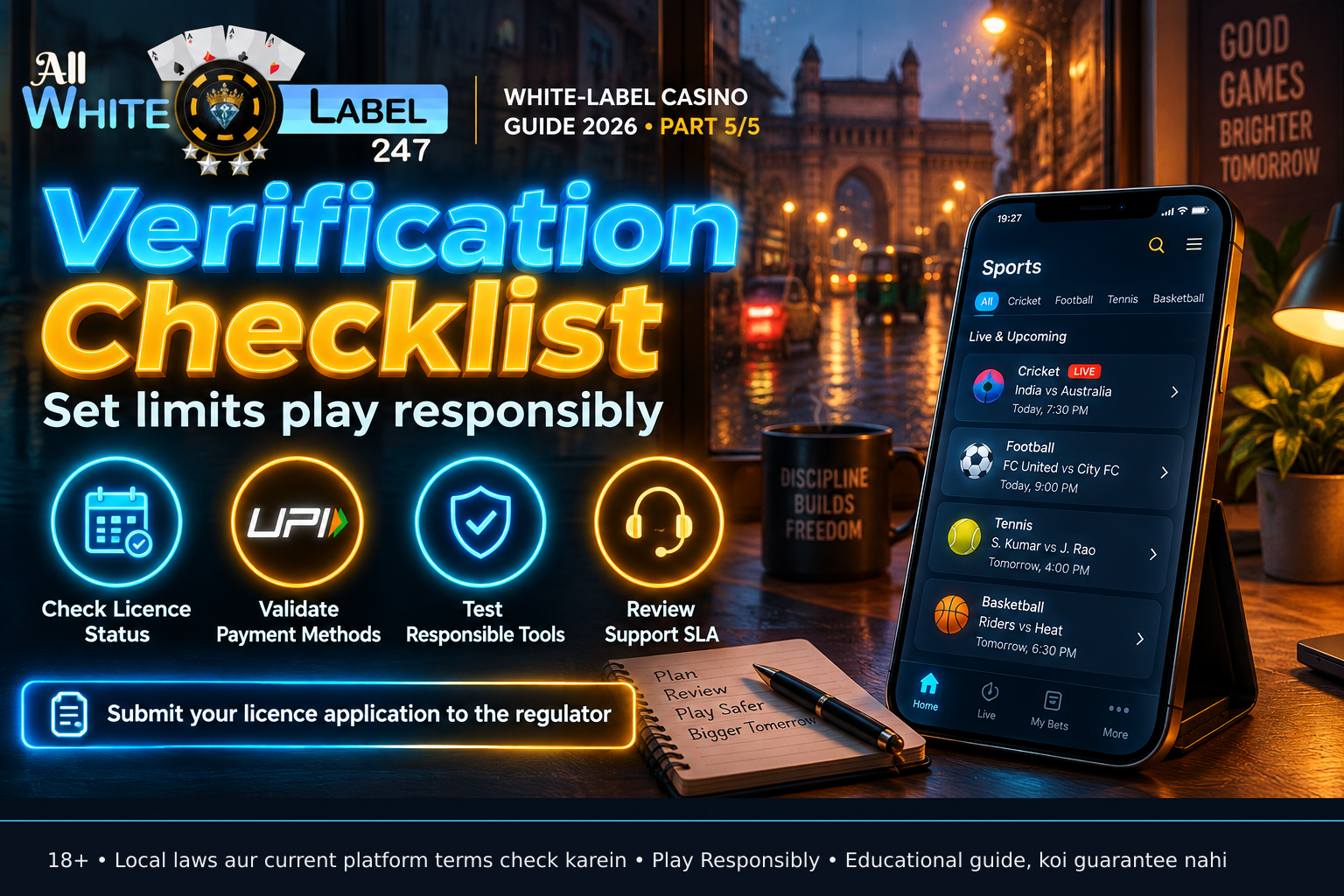
- Submit your licence application – You are the applicant. The provider can share compliance templates, but you must submit to the regulator.
- Configure the back office – Set payment providers, margins, maximum stakes and responsible-gaming limits.
- Brand the skin – Upload your logo, adjust colour schemes and test the user flow on mobile and desktop.
- Launch a soft launch – Open a limited player pool, monitor deposits, withdrawals and responsible-gaming triggers.
- Go live – Flip the site to public. Keep the responsible-gaming dashboard active and review analytics weekly.
Common mistakes to avoid
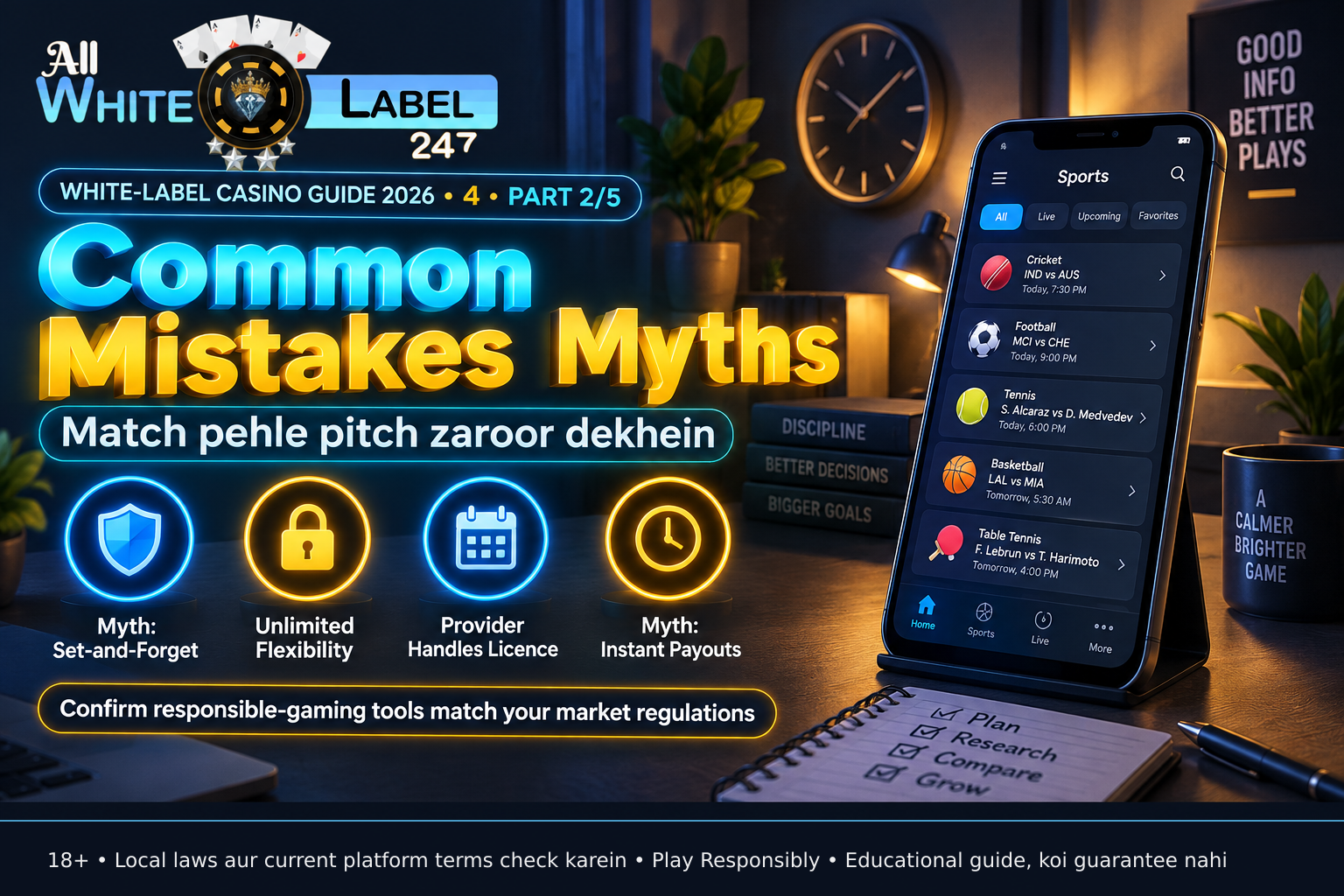
- Treating the white-label licence as a turnkey licence. The software licence is not the same as a gambling licence. You must still apply for and maintain your own gaming licence.
- Assuming you can add any game you want. The core vault is fixed. If you need a specific studio’s title, check whether the provider has an API add-on or if you need a custom integration.
- Underestimating the compliance workload. Responsible-gaming tools, KYC/AML checks and monthly tax filings are not "set and forget." They require ongoing attention.
- Ignoring the revenue-share model. Most white-label deals include a percentage of net gaming revenue. Know the exact split, the definition of "net revenue" and the payment schedule before you sign.
- Skipping the SLA discussion. If the site goes down during a major sporting event, how fast is the provider’s response? Get it in writing.
Quick checklist: what to verify before following this path
| What to check | Why it matters |
|---|---|
| Game RTP and audit reports | Ensures the titles you offer are fair and compliant. |
| Payment settlement cycle | Affects your cash flow and player trust. |
| Licensing guidance from the provider | Confirms what they do and what you must do. |
| Responsible-gaming tool configurability | Ensures you can meet the regulations of your target market. |
| Revenue-share split and payment terms | Determines your margin and financial planning. |
| SLA for support and uptime | Protects you during peak traffic or technical incidents. |
FAQ
Q: Do I need a gambling licence if I use a white-label platform? A: Yes. The white-label provider gives you the software, but the gambling licence is always issued in your name. You must apply through the relevant regulator, complete background checks and meet all jurisdictional requirements. The provider may share compliance templates, but the legal onus remains with you.
Q: Can I change the game library after I launch? A: Most providers allow you to enable or disable titles from their vault, and some allow you to add a limited number of additional games via API. A full replacement of the game library usually requires a contract renegotiation or a custom integration, so clarify the process before you go live.
Q: What happens to player data if I switch providers? A: Data ownership terms vary by contract. Some agreements state that the player database remains your property, while others require you to migrate or delete data within a set timeframe. Request a data-exit clause in your agreement and plan a migration path if you ever switch platforms.
Q: How much does a white-label casino cost upfront? A: Set-up fees typically range from a few lakhs to several tens of lakhs, depending on the game library size, number of payment providers and the level of branding customisation. Some providers also charge a monthly hosting or support fee on top of the initial payment.
Q: Is a white-label platform legal in India? A: Online gaming legality in India is determined at the state level. Some states permit skill-based games, others ban all real-money gaming. You must consult a legal expert and the relevant state regulator before launching. A white-label platform does not change the legal status of your operation.
Q: What responsible-gaming tools should I have in place? A: At a minimum, you should offer self-exclusion, deposit limits, loss limits, time-out periods and reality checks (session-time reminders). The specific features required depend on the jurisdiction you serve. Most regulators expect operators to have a responsible-gaming policy, staff training and a mechanism for players to set their own limits.
Q: Can I use my own payment gateway instead of the provider’s defaults? A: Yes, most white-label platforms allow you to add or remove payment providers. However, each new integration may require API whitelisting, compliance checks and sometimes a small setup fee. Confirm the onboarding process and any recurring fees with the provider.
Q: What is the typical revenue-share split in a white-label deal? A: Splits vary, but a common structure is 70/30 or 80/20 in favour of the operator, with the provider taking the remainder as a platform fee. Some deals use a tiered model where the operator’s share increases as monthly revenue crosses defined thresholds. Always get the exact percentage and the definition of "net gaming revenue" in writing.
Q: How long does it take to go from sign-up to going live? A: From signing the agreement to a public launch, the process usually takes 4–12 weeks. This includes licence preparation, back-office configuration, branding and a soft-launch phase. If you need a custom skin or additional compliance steps, add two to four weeks.
Q: What if a player has a dispute about a game outcome? A: The white-label provider typically hosts the game software, but the operator is the registered entity that interacts with the player. Your terms and conditions, dispute-resolution process and any certified RNG audit reports should be readily available to players. Keep copies of audit certificates and a clear internal escalation path.
Contact us
If you are evaluating white-label options and need a checklist to compare providers, get in touch through our contact form. We can walk you through the typical cost ranges, the licensing questions to ask and the responsible-gaming framework you will need to put in place. No obligation, no pressure—just the information you need to make an informed decision.
Sources
- iGaming Business white-label guide 2024 – overview of turnkey casino solutions and operator responsibilities.
- EGR Operator Survey 2023 – cost benchmarks and timelines for white-label vs custom builds.
- AllWhiteLabel247 internal platform documentation – white-label vs turnkey vs custom comparison matrix.
- FEMA and Ministry of Electronics and IT guidelines 2024 – regulatory framework for online real-money gaming in India.
18+ Play responsibly. Decide your budget before you play and never chase losses. Check the current terms and local laws of the platform you use. The odds, RTP and house edge stated in any game are long-run averages and do not guarantee any outcome. If you or someone you know has a gambling problem, help is available through local counselling services.