

Quick answer: Launching a white-label casino in 2026 takes four stages – choose a provider, integrate games and payments, complete compliance, run a soft launch before opening to real players. The provider handles platform setup, game library and payment gateway connections, while the operator owns brand setup, marketing, player acquisition and all licence and responsible-gaming obligations. Verify any licence requirement yourself before going live.
Key takeaways
- A white‑label model lets you launch faster than building from scratch, but you still own the brand, marketing and regulatory compliance.
- Costs and timelines vary by provider and market; treat all figures as ranges with known movers (integration complexity, jurisdiction, payment method).
- You must complete your own compliance checks; no provider can guarantee a licence or regulator approval.
- Responsible‑gaming tools are part of your operator duty, not an optional add‑on.
- A soft launch with internal testers and limited real‑player access helps you catch integration or compliance gaps before a full open.
What it is and why it matters
A white‑label casino solution gives you a turnkey platform – the software, games, payments and back office – so you can go to market without building the technology from the ground up. You still choose the brand name, design the user interface, run marketing and handle every legal and responsible‑gaming obligation.
For an operator, the decision is whether to use a white‑label or turnkey package (faster, less control) or build a custom platform (longer timeline, full control). This checklist walks the white‑label path, noting at each step who owns the task and what the operator must verify independently.
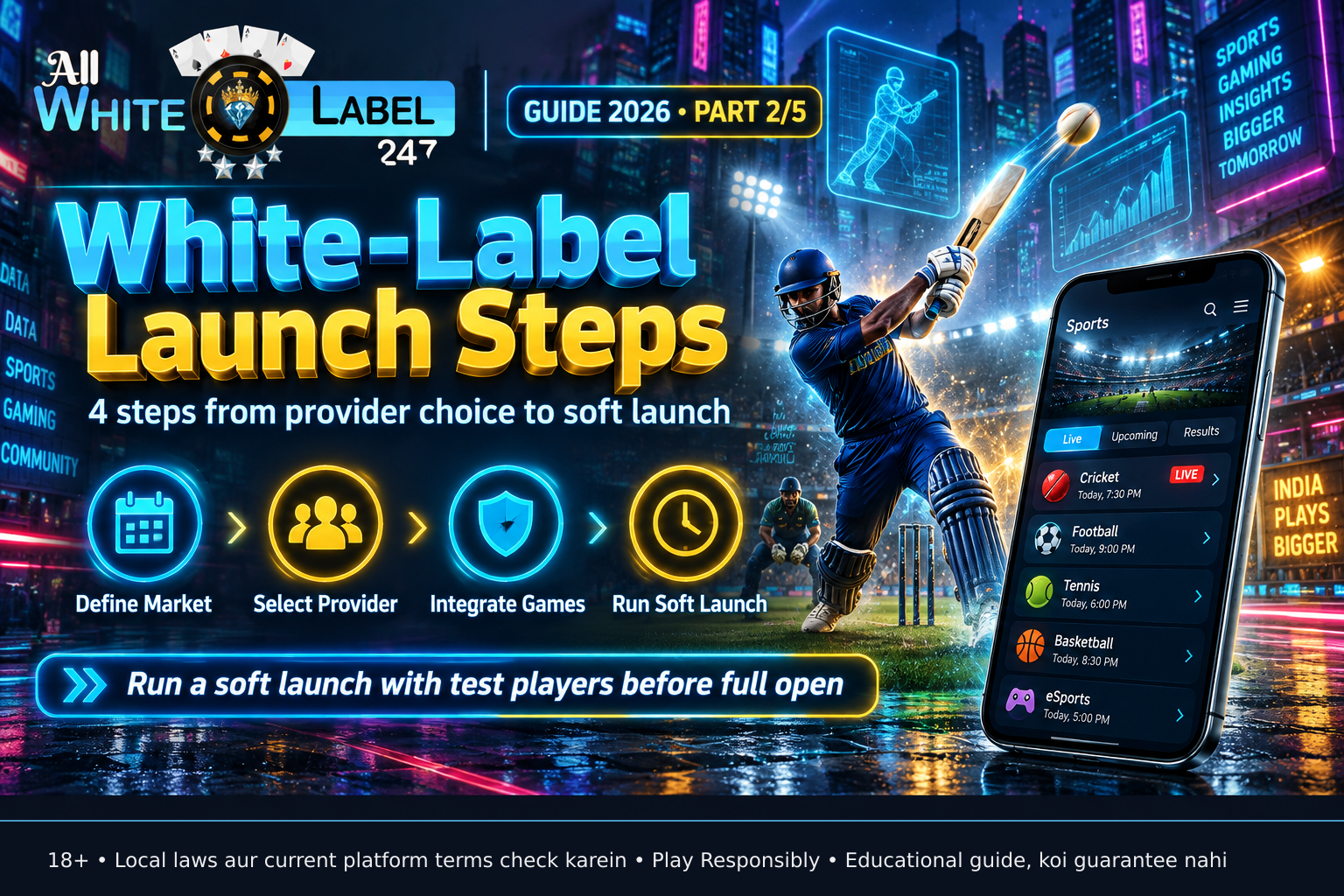
Core checklist: from provider choice to first real player
1. Define your market and brand positioning
Before contacting providers, clarify the jurisdiction you intend to serve, the brand name and the player experience you want. This decision shapes every subsequent step, from game selection to payment integration.
Who owns it: The operator owns the brand decision and market selection. The provider does not choose these for you.
What to check: Local laws regarding online gambling in your target jurisdiction. The provider can tell you which markets their platform supports, but you must confirm that serving your chosen market is legal for you.
2. Select a white‑label provider
Providers differ in the breadth of their offering – some supply a full casino and sportsbook, others focus on one vertical. Request a detailed scope of work, including the game library, payment gateway list, back‑office features and any API limitations.
Who owns it: The provider delivers the platform setup and integration. The operator approves the scope and signs the contract.
What to check: Ensure the provider’s roadmap aligns with your launch timeline. Ask for references or case studies from operators who have launched with them.
3. Integrate games and verify RNG fairness
The provider will supply a library of casino games (slots, table games, live dealer). You must verify that the games’ Random Number Generators are tested and that the provider can supply the return‑to‑player (RTP) data you need for responsible‑gaming reporting.
Who owns it: The provider integrates the games and supplies the RNG certification documents. The operator verifies the documents and confirms they meet local requirements.
What to check: Do not accept a generic “independently tested” statement. Ask for the test certificate, the testing laboratory name and the date of the test. Review these yourself; the claims check refuses any unverified licence or RNG claim.
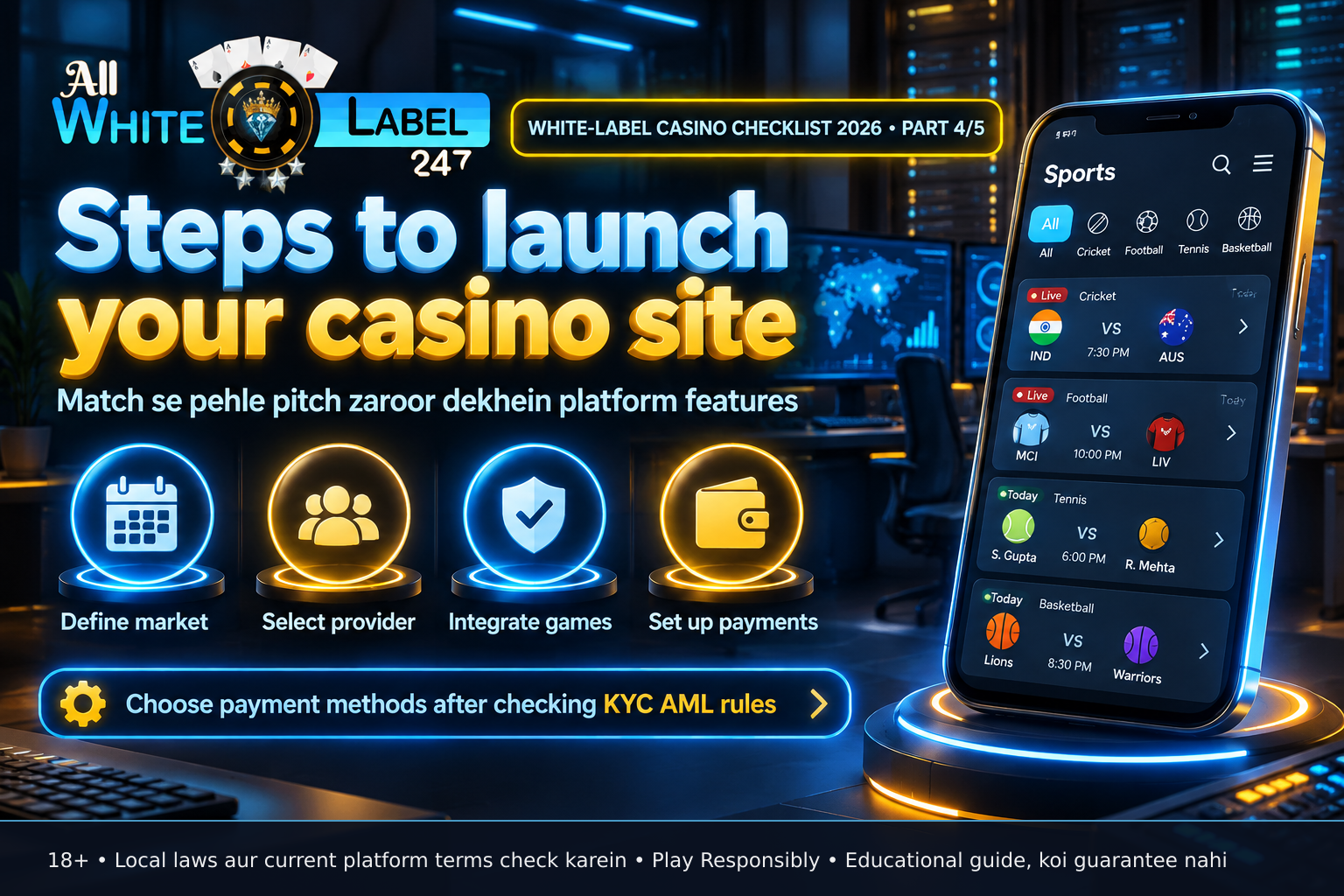
4. Set up payments and banking integration
You will need to integrate deposit and withdrawal methods suitable for your market – UPI, net banking, e‑wallets, or card processors. The provider may offer a pre‑integrated list, but you are responsible for ensuring each method complies with local financial regulations.
Who owns it: The provider connects their payment API to your account. The operator chooses which methods to offer and ensures KYC/AML compliance for each.
What to check: Processing times, fees and any per‑transaction limits vary by provider and bank. These figures are specific to your chosen provider and payment partner; treat them as ranges and verify current terms on the official platform page.
5. Complete compliance and legal checks
This is the step most often underestimated. You must ensure the platform’s operation complies with the laws of every jurisdiction you serve. This includes age‑verification procedures, anti‑money‑laundering (AML) checks, responsible‑gaming tool mandates and any advertising restrictions.
Who owns it: The operator is legally responsible. The provider may offer compliance features (geo‑blocking, self‑exclusion integration), but you must configure and maintain them.
What to check: Local licensing requirements. The claims check refuses any article that names a specific regulator, licence number or “licensed by” statement. You must check the official regulator registry yourself and record the result in your own compliance files.
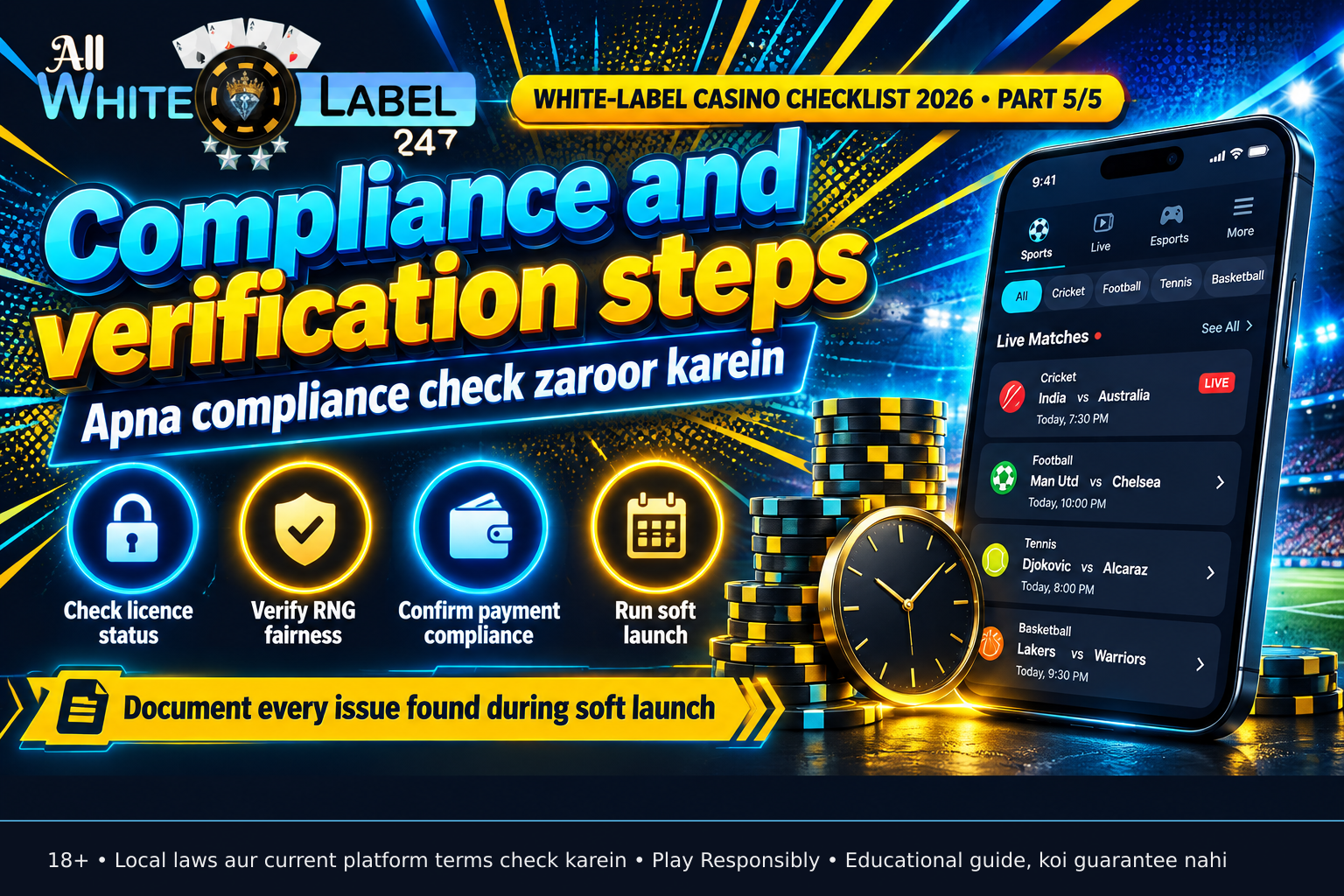
6. Run a soft launch with test players
Before opening to the public, run a soft launch using internal staff or a small group of invited players. This stage lets you test every funnel – registration, deposit, game play, withdrawal – and verify that all integrations work as expected.
Who owns it: The operator runs the soft launch. The provider supports with technical troubleshooting.
What to check: Look for failed deposits, stuck withdrawal requests, missing responsible‑gaming prompts and any geo‑blocking failures. Document every issue and have the provider address it before you move to a wider launch.
7. Go live and monitor the first cycle
After a successful soft launch, open to your first real players. The initial days are critical: monitor transaction volumes, responsible‑gaming tool uptake and any player support tickets. This is when you confirm that the provider’s platform holds up under real usage.
Who owns it: The operator manages the live environment, player support and compliance monitoring. The provider offers backend support as per your contract.
What to check: Transaction success rates, average session length, and the effectiveness of self‑exclusion and deposit‑limit features. Adjust payment methods or game settings if the data shows friction.
Also read: What is a white-label casino platform?
Common mistakes to avoid
- Skipping the compliance verification. Assuming the provider’s “licensed” status covers you is a quick way to regulatory trouble. You must check the official regulator registry yourself.
- Accepting unverified RNG or RTP figures. The claims check blocks any article that states an RTP or fairness certification without a verifiable source. Ask for the certificate, review it, and record your finding.
- Underestimating the responsible‑gaming duty. Tools like deposit limits, self‑exclusion and time‑outs are not optional extras; they are part of your operator obligation. Configure them before you go live.
- Choosing a provider without a clear scope. If the contract does not spell out who owns which integration step, you will face disputes later. Get everything in writing before you sign.
Quick checklist: before going live
| Item | What to do | Status |
|---|---|---|
| Market and brand decision | Confirm legal jurisdiction and brand name | ☐ |
| Provider scope | Review and sign a detailed scope‑of‑work document | ☐ |
| Game library and RNG | Request and verify RNG test certificates | ☐ |
| Payment methods | Select methods; verify KYC/AML compliance for each | ☐ |
| Compliance checklist | Complete local law review; file all documents | ☐ |
| Soft launch | Run internal test; fix every reported issue | ☐ |
| Go‑live monitoring | Monitor transactions, support tickets, tool uptake | ☐ |
Also read: Adding Live Casino to a White-Label Site
Brand section
AllWhiteLabel247 provides white‑label casino and sportsbook platforms for operators in India and South Asia. The platform includes game library integration, payment gateway connections and a back‑office suite. You must fill in your brand name, licence compliance and marketing strategy from your own side; no offer, percentage or feature is implied or guaranteed by AllWhiteLabel247. Current terms and licence details should be verified on the official regulator registry.
Call to action
If you are evaluating a white‑label casino platform, start by mapping your target market and listing the compliance checks your jurisdiction requires. Then request detailed scopes from at least two providers and compare them on integration depth, game library breadth and the support they offer for responsible‑gaming tool configuration.
FAQ — suited to FAQ schema
Q: What is the typical timeline to launch a white‑label casino? A: Timelines vary by provider and market, but a typical range is three to six months from contract signing to first real player. The exact duration depends on game integration complexity, payment method setup and how quickly you complete your own compliance checks.
Q: Do I need my own gambling licence to use a white‑label platform? A: Licence requirements are determined by the jurisdiction you serve, not by the platform model. You must verify your local licence obligations through the official regulator before going live. The platform provider can support compliance features, but they cannot guarantee or issue a licence on your behalf.
Q: Who owns the player data in a white‑label setup? A: Player data ownership is defined in your contract with the provider. In most white‑label arrangements, the operator owns the customer relationship and data, while the provider hosts the platform and processes data in accordance with the agreement. Review the data‑privacy clause before you sign.
Q: Can I choose which game providers appear in my white‑label casino? A: Many white‑label platforms offer a modular game library. You can typically select which game studios or titles to include, but the final selection may be subject to the provider’s existing contracts and regional availability. Ask the provider for the full list and your ability to add or remove titles.
Q: What responsible‑gaming tools must I offer my players? A: The required tools depend on your jurisdiction’s regulations. Common mandates include deposit limits, loss limits, wagering limits, self‑exclusion options and time‑out features. You must configure these on the platform and ensure they are effective before you accept real‑money deposits.
Q: How do payment withdrawals work for players? A: Withdrawal processing depends on the payment method chosen and the provider’s integration. E‑wallets and UPI typically process faster than card or bank transfers. You must verify current processing times and any per‑method limits on the official platform page or through your payment partner.
Q: What happens if a player’s deposit fails? A: A failed deposit may result from insufficient funds, bank rejection, or network issues. The player’s funds remain in their bank account; no money is debited to the casino. If the amount is debited but does not appear in the casino wallet, the player should contact support with the transaction reference.
Q: Can I change payment methods after I have gone live? A: Yes, most platforms allow you to add or remove payment methods via the back office. Changes may require re‑certification with the payment provider and can affect existing player wallets. Plan any method changes during a low‑traffic period and communicate them to players in advance.
Q: Is the white‑label platform mobile‑friendly? A: Most modern white‑label platforms are built responsive, meaning they work on mobile browsers and often have a dedicated app shell. You should test the player experience on the most‑used devices in your target market before going live.
Q: What support does the provider offer after launch? A: Provider support typically covers backend technical issues, game‑integration bugs and platform updates. Operator support – handling player queries, KYC checks and responsible‑gaming tool configuration – is your responsibility as outlined in the contract.
18+ line and responsible‑play note
18+ – You must be 18 years old (or the legal age in your jurisdiction) to play. Play responsibly – set a budget before you start, use the platform’s tools to limit deposits or sessions, and never chase losses.