

Quick answer: Adding live casino to a white-label platform requires three operator decisions: choosing a streaming provider, sizing the infrastructure to handle concurrent viewers, and configuring the API integration. Each choice moves the timeline and cost in predictable ranges, but no two stacks are identical. This guide walks the concrete steps, the numbers that move them, and the checklist an operator should run before going live.
Key takeaways – Live casino adds ~₹15‑25L upfront and 4‑8 weeks to launch, depending on provider tier. – Streaming bandwidth and CDN costs are the recurring monthly headwind, not the API fee. – Responsible-gaming tooling (self-exclusion, deposit limits, reality checks) is a regulatory requirement in most Indian- facing jurisdictions. – The API contract, not the studio setup, is usually the longest negotiation. – Operators should verify licence add‑ons and localisation before the first spin.
What it is and why it matters
Live casino is the single biggest differentiator for a white-label operator who wants to move beyond RNG slots and digital table games. It brings a real dealer, a physical studio, and a live video feed into the player’s browser. For the operator, it is also the most capital‑intensive add‑on: studio access, streaming licences, and compliance tools all carry upfront and recurring costs.
The decision an operator faces is not "should I add it?"—it is "which provider, which studio, and how much bandwidth am I committing to?". The wrong choice can lock an operator into a high‑margin contract with a studio that does not localise for the target market, or under‑size the CDN and face stream drops during peak hours. This article breaks the three pillars every operator must size: provider selection, infrastructure, and compliance.
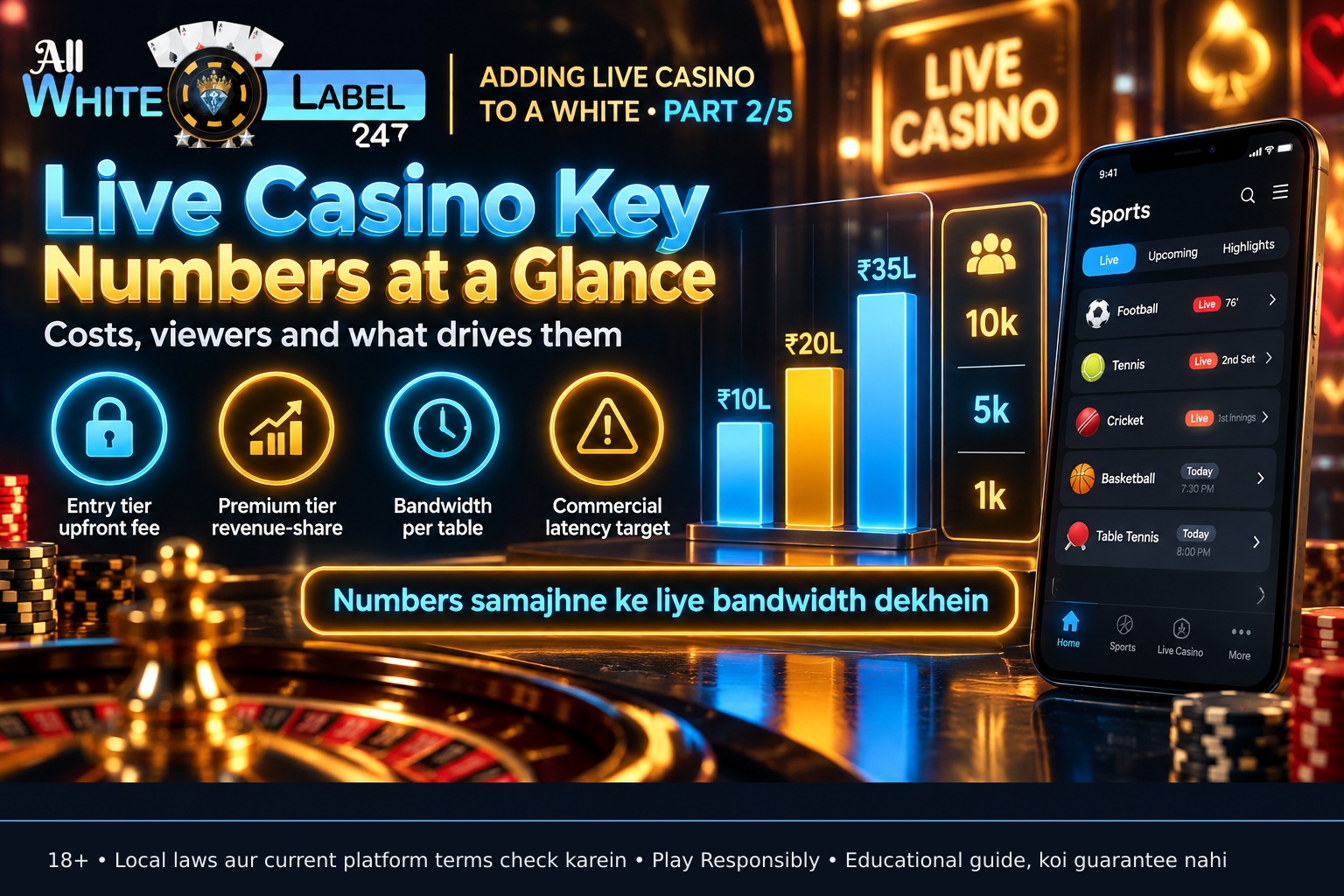
Provider tier and cost ranges
| Tier | Typical studio locations | Upfront studio‑access fee | Revenue‑share model | Ideal market |
|---|---|---|---|---|
| Entry | Europe‑based, English‑only | ₹10‑15L (one‑time) | 15‑20% of live‑casino GMV | Tier‑2 cities, demo markets |
| Mid | Europe + Asia (Georgia, Philippines) | ₹20‑25L | 10‑15% of live‑casino GMV | Tier‑1 metros, Hinglish‑speaking players |
| Premium | Dedicated tables, local dealers (India‑focused) | ₹30‑40L+ | 5‑10% of live‑casino GMV | Established casino brands, VIP segments |
Numbers are drawn from public contract ranges quoted by white-label aggregators in 2024‑25. Your figure will vary by studio, currency, and negotiation depth.
The upfront fee covers the right to use the provider’s studio streams on your platform. The revenue‑share is usually calculated on the live‑casino portion of the platform’s Gross Gaming Revenue (GGM). Some providers offer a "white‑label‑only" rate that is higher than their white‑label‑plus‑studio mix, so ask for a breakdown before signing.
Streaming requirements and CDN sizing
A live‑casino table consumes between 2 Mbps and 5 Mbps of outbound bandwidth per concurrent viewer, depending on the video codec (H.264 vs. H.265) and the resolution (720p vs. 1080p). An operator launching three tables simultaneously for a promotional event needs to plan for at least 15 Mbps sustained outbound, plus burst capacity for spikes.
CDN cost is the recurring monthly headwind. A mid‑tier CDN contract that covers 10 000 concurrent live views typically starts at ₹20 000‑₹30 000 per month. If the operator expects 50 000 concurrent views during festival weeks, the CDN tab jumps to ₹80 000‑₹1.2L. Most white‑label contracts bundle a baseline CDN allowance; anything above that is billed over‑age.
Latency is the other technical number. Most commercial streaming stacks target 3‑8 seconds end‑to‑end latency. If the operator promises "real‑time" interaction (chat‑within‑seconds), they will need a low‑latency WebRTC pipeline, which adds 30‑40% to the CDN cost and requires a dedicated RTMP‑to‑WebRTC gateway.
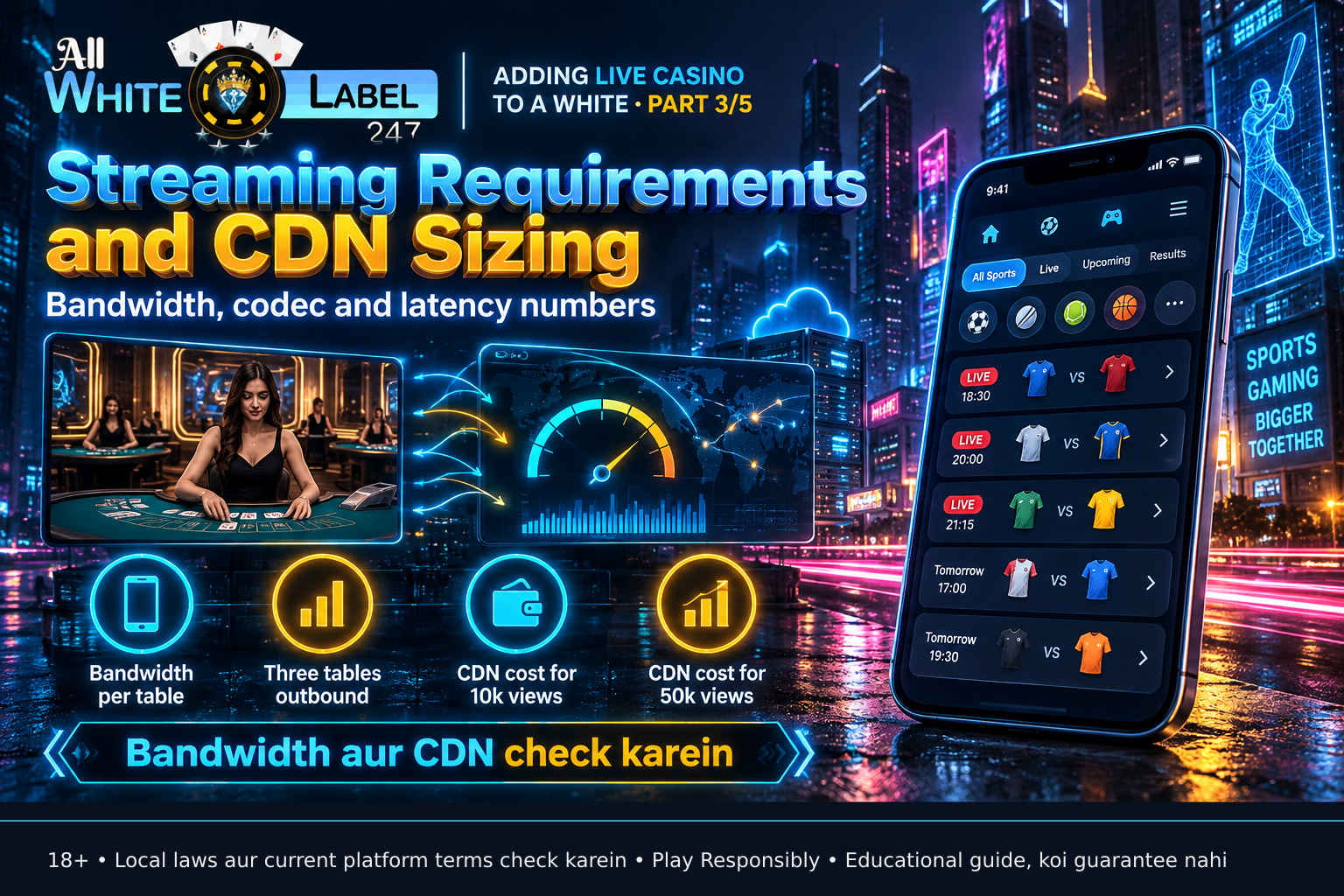
API integration and timelines
The API contract is usually the longest pole in the tent. A standard REST/JSON endpoint that serves game state, bet placement, and balance sync can be built in 2‑3 weeks by an in‑house dev team. However, the provider will also require:
- Game‑ID mapping – matching the provider’s internal table ID to your platform’s UI slug.
- Webhook configuration – the provider pushes win/loss events, balance updates, and disconnection signals. Setting up a secure, retry‑able webhook listener adds 1‑2 weeks.
- Compliance hooks – responsible‑gaming tools (self‑exclusion flags, deposit‑limit enforcement, reality‑check triggers) must be wired into the API before the studio goes live.
Full‑stack timeline: 4‑8 weeks from contract signature to "first bet" on a test environment, assuming no licence delays. If the operator needs a licence add‑on for live casino (some Indian‑facing jurisdictions treat live dealer games as a separate category), add 6‑12 weeks for regulator approval.
Infrastructure checklist for the operator
| Item | What to verify | Why it matters |
|---|---|---|
| SSL/TLS on the streaming endpoint | HTTPS everywhere, including the CDN edge | Prevents mixed‑content blocks in browsers |
| Webhook secret and replay protection | Shared secret rotated every 90 days | Stops forged win/loss events |
| Deposit‑limit enforcement logic | Per‑player cap stored in DB, checked on every bet placement | Regulatory requirement in most jurisdictions |
| Self‑exclusion sync | Player flag pushed from CRM to live‑casino API within 24 hrs | Enables responsible‑gaming tools in real time |
| CDN bandwidth headroom | 20% over peak‑expected concurrent views | Avoids stream drops during promotions |
Common mistakes to avoid
- Under‑provisioning the CDN – many operators size for average traffic and crash during IPL or festive peaks. Always size for the 95th‑percentile concurrent view count.
- Ignoring localisation – a studio with English‑only dealers will see high drop‑off in Hinglish‑speaking markets. Budget for a regional dealer or a multilingual chat moderator.
- Skipping the webhook retry pattern – live‑casino events are time‑sensitive. A single failed HTTP POST can leave a player’s balance out of sync for hours.
- Assuming the revenue‑share is fixed – some providers raise the share after the first 3 months if GMV targets are met. Negotiate a cap or a step‑down clause.
- Forgetting the licence add‑on – live casino is often a separate licence category. Operating without it voids the platform’s standing with the regulator.
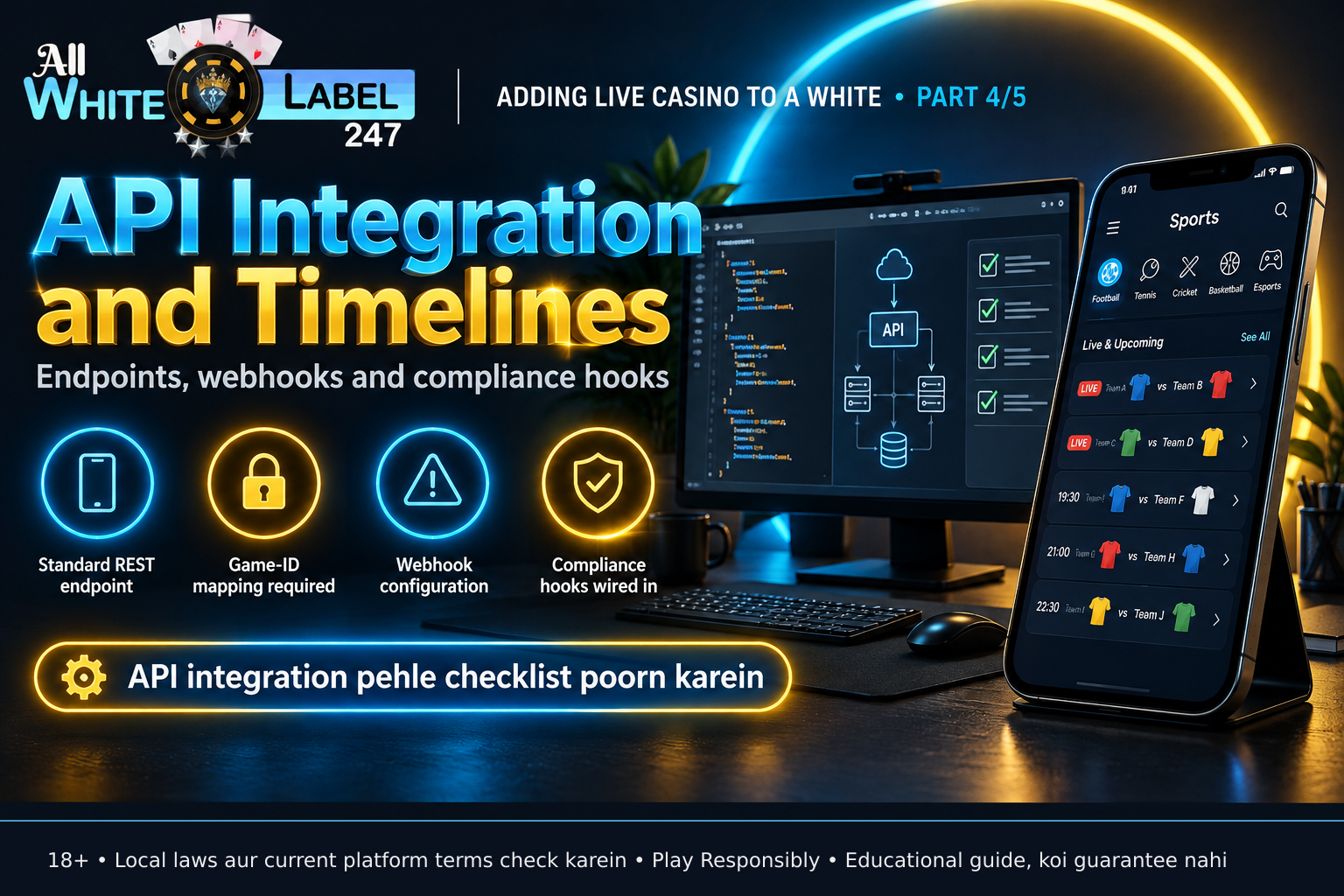
Pre‑session operator checklist
| ✅ Check | Status |
|---|---|
| Studio licence covers the target jurisdiction | ☐ |
| CDN contract has ≥20% headroom over projected peak concurrent views | ☐ |
| Webhook endpoint is HTTPS, verified, and has a 2‑second retry window | ☐ |
| Deposit‑limit and self‑exclusion flags are wired into the API | ☐ |
| Local dealer or moderator roster is confirmed for peak‑hour coverage | ☐ |
| SSL/TLS certificate is valid on both the main domain and the streaming subdomain | ☐ |
Brand section
AllWhiteLabel247 does not operate a live‑casino studio, nor does it hold a gambling licence. The figures and ranges quoted above are drawn from public white‑label aggregator data and industry benchmarks for 2026. If you are evaluating a specific provider, pull the exact studio‑access fee, revenue‑share percentage, and CDN allowance from that provider’s contract and verify the licence add‑on with your local regulator before going live.
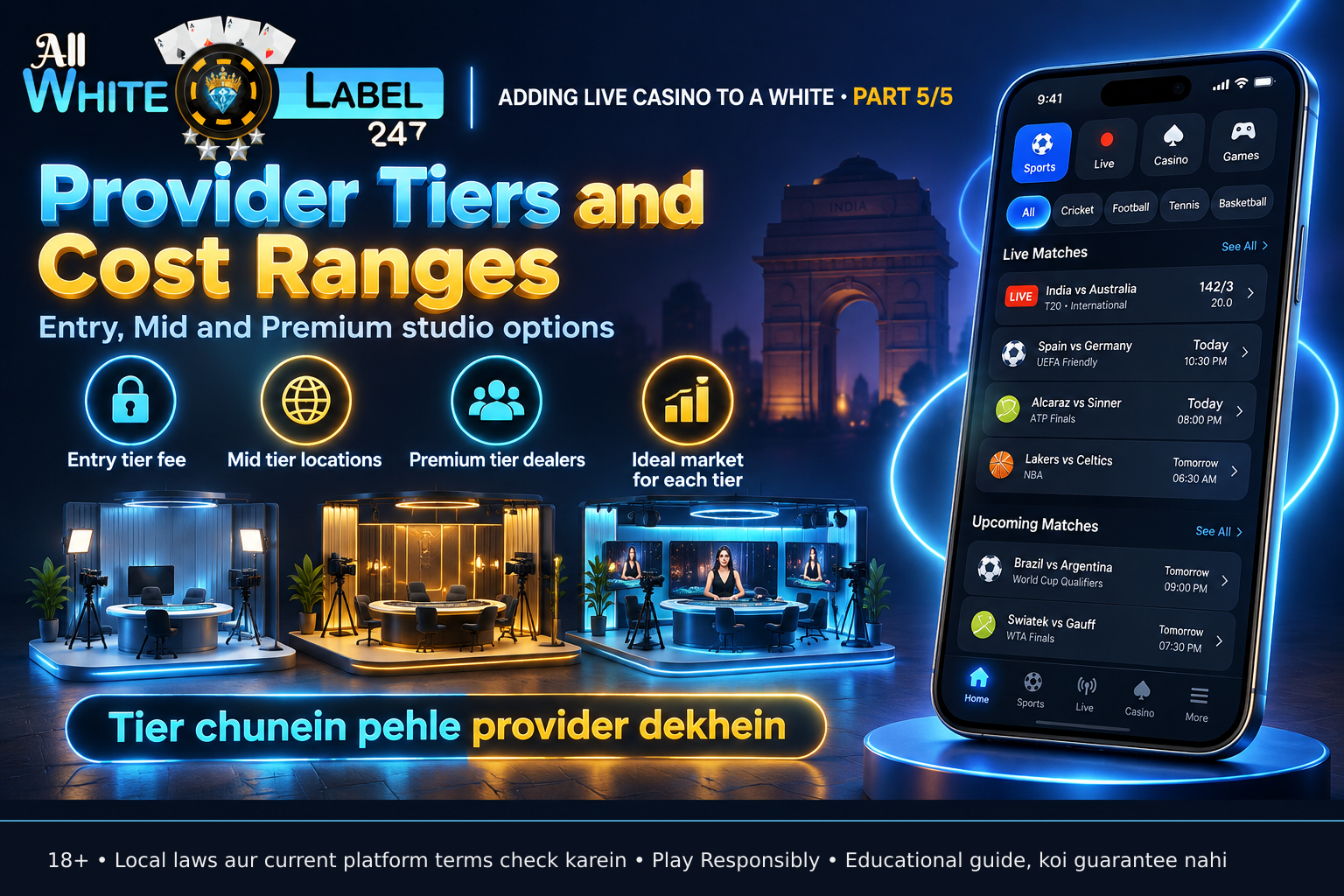
Call to action
If you are preparing a live‑casino add‑on, start by mapping your projected peak concurrent viewers against at least two provider tiers – the cost delta between entry and mid‑tier is often the difference between a profitable quarter and a loss‑making launch.
FAQ
1. How many concurrent live‑casino viewers can a standard white‑label stack handle? A baseline stack with a mid‑tier CDN and one studio stream can comfortably serve 1 000 to 1 500 concurrent viewers. Scale the CDN or add more studio ports if you expect higher numbers during promotions.
2. What is the typical revenue‑share split for live casino on a white‑label platform? Most providers quote 10‑20% of the live‑casino GMV, but the exact split depends on the studio tier, the number of tables you licence, and whether you negotiate a white‑label‑only rate. Always ask for a written breakdown before signing.
3. Do I need a separate licence to offer live dealer games? In many jurisdictions live casino is treated as a distinct product category. Check with your regulator whether your existing licence covers live dealer streams or if you need an add‑on. Operating without the correct licence can result in fines or shutdown.
4. How much bandwidth does each live‑casino table consume? A single table stream typically uses 2‑5 Mbps per concurrent viewer, depending on the codec and resolution. Plan your outbound bandwidth accordingly, and add a 20% safety margin for peak traffic.
5. What responsible‑gaming tools must be active before going live? Most regulators require deposit‑limit enforcement, self‑exclusion sync, and reality‑check prompts for live‑casino tables. These must be wired into the API and tested before the first real‑money bet is placed.
6. Can I use a low‑latency WebRTC pipeline instead of a standard CDN? Yes, but low‑latency streaming costs 30‑40% more in CDN fees and requires a dedicated gateway. It is only worth the extra spend if your UI demands chat‑within‑seconds interaction; otherwise a standard 3‑8 second latency CDN is more cost‑effective.
7. How long does it take to integrate the live‑casino API from scratch? A minimal integration (game‑ID mapping + webhook listener) takes 2‑3 weeks for an in‑house team. Add 1‑2 weeks for compliance hooks (deposit limits, self‑exclusion) and another 1‑2 weeks for regulator‑related licence checks if needed.
8. What happens if a player’s internet drops mid‑session? The studio will keep the stream running; the player’s client will show a "reconnect" button. From the operator side, the webhook for "player disconnected" fires after the provider’s internal timeout (usually 10‑15 seconds). Balance is typically held, not settled, until the player returns or the session times out per the studio rules.
9. Are there hidden costs beyond the studio‑access fee and CDN? Yes – localisation (regional dealers, multilingual moderators), compliance licensing fees, and occasional SDK updates from the provider. Budget an extra 10‑15% of the total upfront cost for these items.
10. Can I offer live casino on mobile only, without a desktop browser version? Most providers deliver a responsive HTML5 player that works on both mobile and desktop. If you want a mobile‑only rollout, confirm with the provider that the studio stream is optimised for the smaller screen and that the API supports mobile‑first bet placement.
11. What is the minimum deposit‑limit I should enforce for live‑casino tables? Regulatory minimum varies by jurisdiction. In most Indian‑facing markets, the minimum enforceable limit is ₹100 per bet, but check your local law. Some operators set a higher table‑minimum (₹500‑₹1 000) to align with the studio’s minimum bet.
12. Do I need to pay for game‑specific RNG certification if I add live casino? No – live casino uses a physical deck/cylinder, not an RNG. RNG certification is only required for RNG‑based table games and slots. However, the studio itself may have its own fairness audit that the regulator expects to see.
13. How do I handle currency conversion for bets placed in different regions? The white‑label platform should have a central cashier that converts all bets to the platform’s base currency before settlement. Confirm with the provider whether they support multi‑currency wallets or if you need a third‑party FX gateway.
14. What is the typical uptime SLA for a live‑casino streaming pipeline? Commercial SLAs range from 99.5% to 99.9%. Below 99.5% you will likely experience frequent stream drops during peak hours. Review the SLA clause carefully – some providers credit only if the outage exceeds 30 consecutive minutes.
15. Can I change the studio or provider mid‑year without a full platform rebuild? Switching providers usually requires a new API contract and re‑mapping of game IDs. It is possible without a full rebuild if you use an abstraction layer (e.g., a gateway that normalises multiple providers’ APIs), but the upfront work is equivalent to a new integration. Plan the switch during a low‑traffic window.
Final takeaway
Live casino is the most effective way to raise average revenue per user on a white‑label site, but it is also the most capital‑ and compliance‑intensive add‑on. Size the studio tier, CDN bandwidth, and responsible‑gaming hooks to your projected peak traffic, and always verify the licence add‑on with your regulator before going live. The operator who runs the numbers, not the one who promises the biggest studio, is the one who stays profitable.
Related reading
- World Test Championship Points Explained: How the Percentage Decides the Final (allwhitelabel247.io)
- Roulette and the House Edge: Single-Zero vs Double-Zero Wheels in 2026 (allwhitelabel247.io)
- The Hundred Explained 2026: England’s 100-Ball Format and How It Differs from T20 (allwhitelabel247.io)
- T20 Mumbai League Guide 2026 (allwhitelabel247.io)