

Quick answer: As a new iGaming operator you must perform identity checks, verify the source of each deposit, and monitor accounts for suspicious activity before any withdrawal is allowed. You cannot fully hand these duties to a white-label platform; the legal responsibility stays with you. The platform can provide the tools, but the compliance decisions and record-keeping remain yours.
Key takeaways
- Identity verification (KYC) must happen before the first deposit and before any large withdrawal.
- Source-of-funds checks are required for high-value accounts or when a pattern raises a flag.
- Suspicious-activity monitoring is ongoing; you must file reports when something does not match the customer profile.
- White-label tools can automate checks, but the legal responsibility and final decision rest with the operator.
- Record-keeping obligations typically require keeping KYC and transaction logs for five to seven years, depending on jurisdiction.
what it is and why it matters
You are launching an online casino, sportsbook, or exchange. The first compliance hurdle is KYC (Know Your Customer) and AML (Anti-Money Laundering). These are not optional checkboxes; they are legal duties that prevent your platform from being used to move illicit money. If you skip or outsource them completely, regulators can fine you, suspend your licence, or shut the site down.
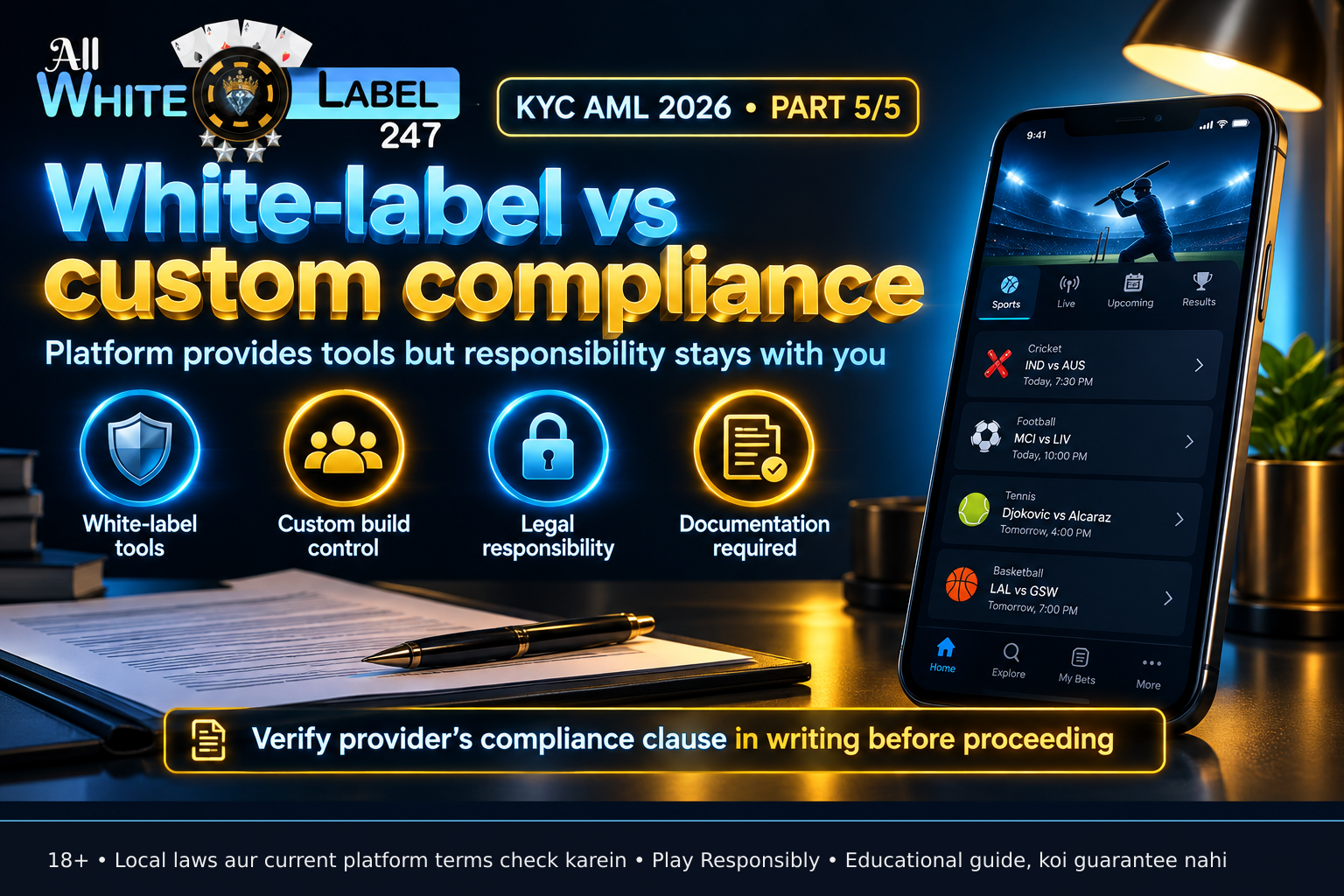
The decision you face is whether you build the compliance layer yourself or use a white-label solution that includes KYC/AML modules. Both paths keep the responsibility on you. A white-label provider can give you the forms, the document scanners, and the alert rules, but you must set the risk thresholds, review the flags, and file the reports. If the platform just says "we handle KYC", ask for the clause in writing — because the regulator will still look at your company’s compliance programme, not just the software’s.
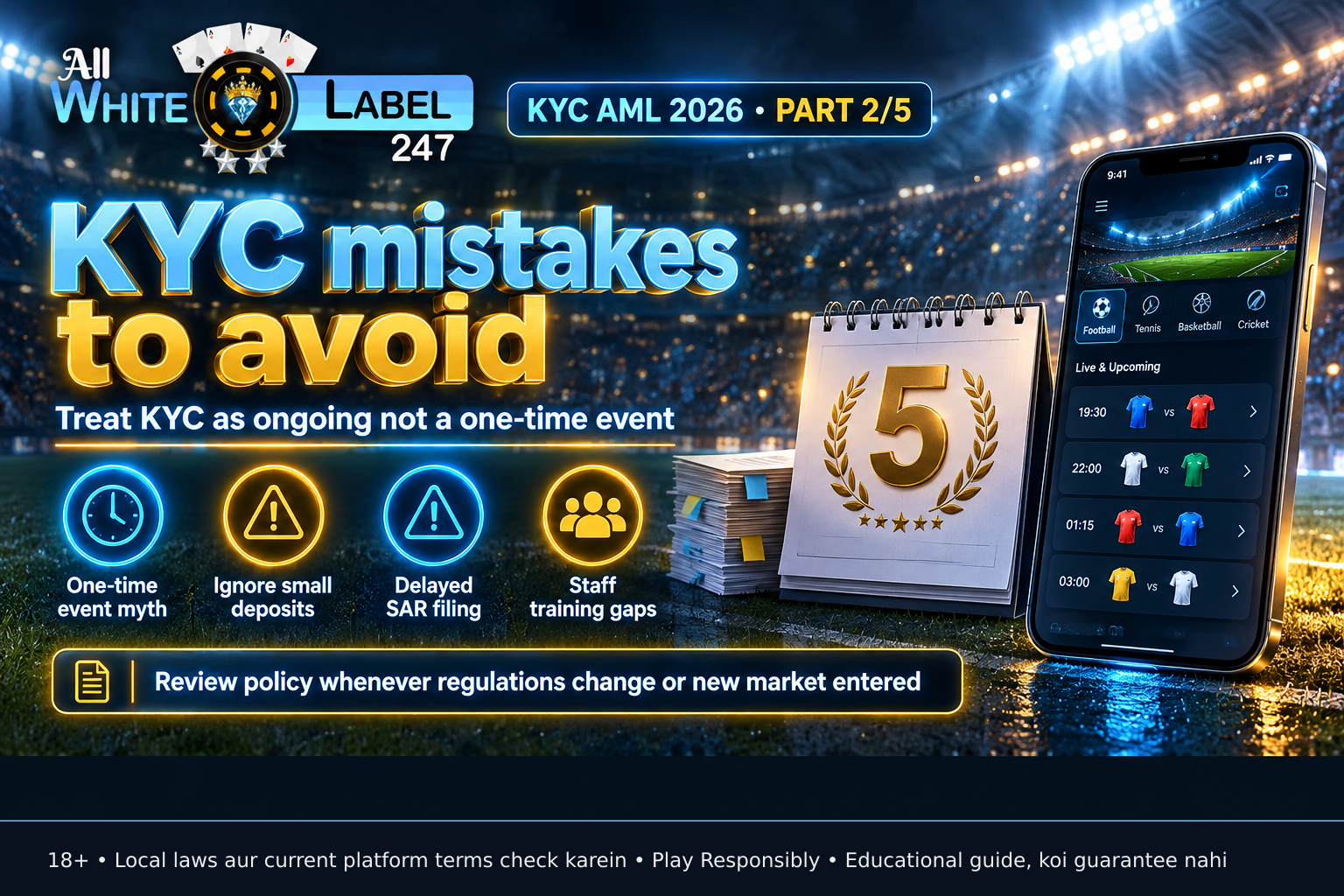
core checklist for every operator
- Customer identification (KYC) – Collect full name, date of birth, address, and a government ID before the first deposit. Use a verified document scanner, but review the result yourself before allowing play.
- Source-of-funds (SOF) – For deposits above your internal threshold (often ₹2 lakh or $2,500 equivalent), ask for proof of income: salary slips, bank statements, or tax returns. Document the source before you release winnings.
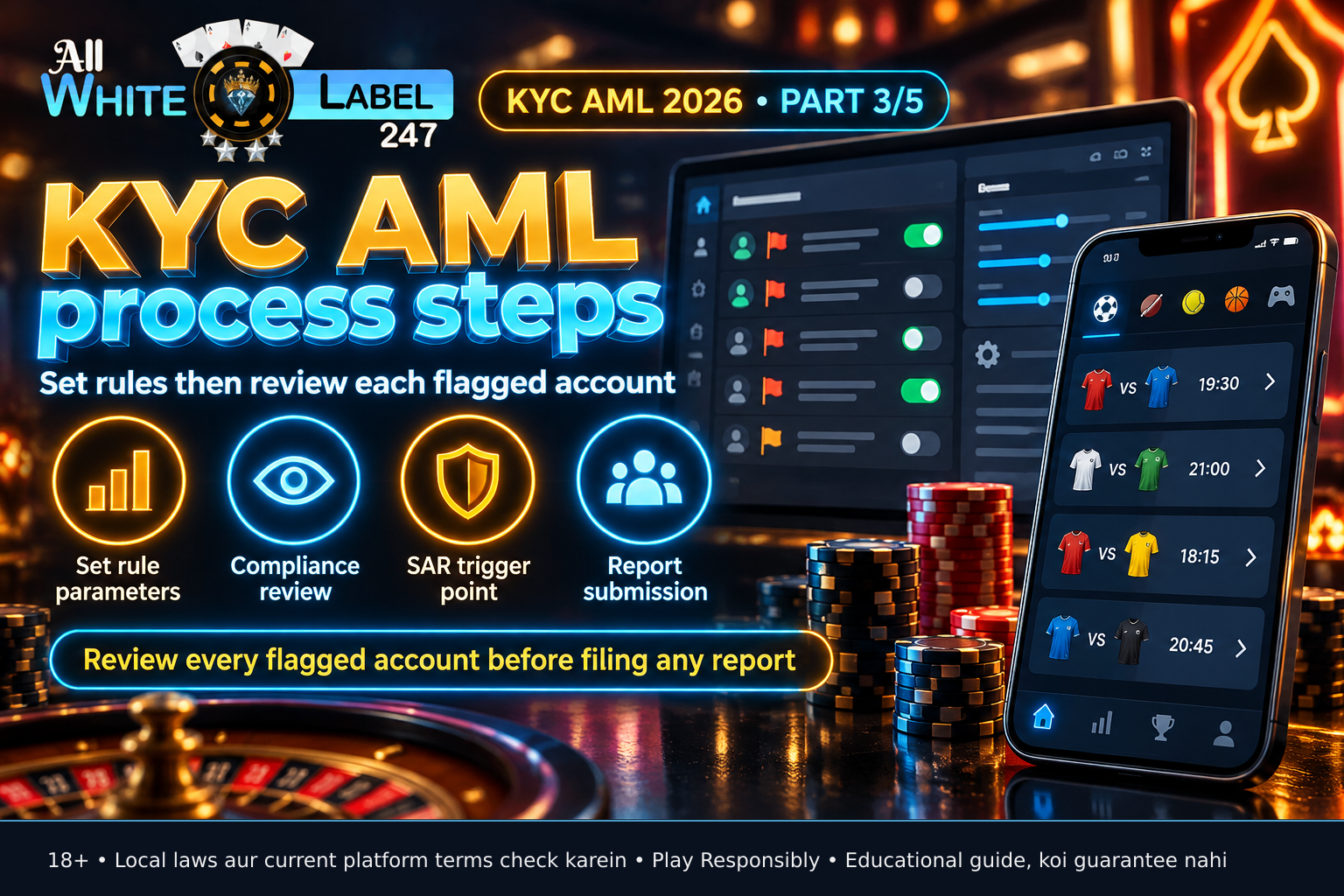
- Ongoing monitoring – Flag accounts that suddenly change betting patterns, deposit from new sources, or transfer large sums to third-party wallets. Set rules in the platform, but review each flag.
- Suspicious-activity reporting – If a transaction or pattern looks like structuring, layering, or fraud, file an SAR (Suspicious Activity Report) with the relevant authority. Do not tip off the customer.
- Record retention – Keep KYC documents, transaction logs, and SAR copies for the period required by your jurisdiction (commonly five to seven years). White-label platforms may store the files, but you must verify the retention policy and have access if audited.
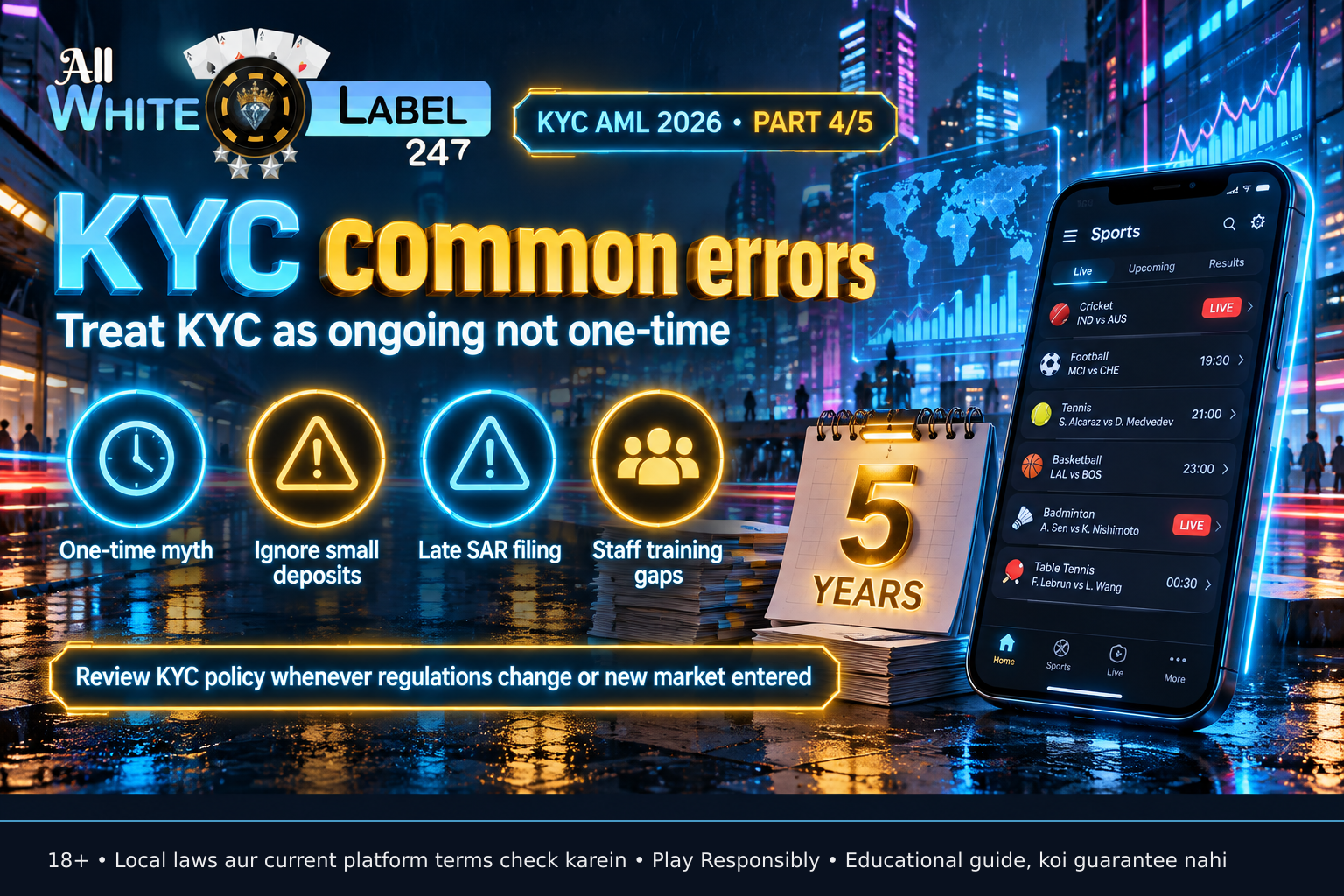
- Staff training – Your team must know the red flags and the reporting process. Train them at least once a year and document the session.
- Policy review – Your KYC/AML policy should be a living document. Review it whenever regulations change, when you add a new payment method, or when you enter a new market.
Also read: White Label Ya Custom Betting Platform?
how the checks work in practice
identity verification (kyc)
When a new user signs up, the white-label form captures name, email, and date of birth. The platform can run the ID through an OCR scanner and match the photo to a selfie. But the operator must decide what to accept: a passport, a driver’s licence, or a utility bill. Set your acceptance criteria in your compliance policy. If the scan fails or the document looks tampered with, reject the registration. Do not let the user bypass the check by claiming "the system accepted it".
source-of-funds checks
After the account is active, watch the deposit size. If a user deposits ₹5 lakh in one go, your policy should trigger a source-of-funds request. Ask for the last three months of bank statements or a salary certificate. The goal is to confirm the money comes from legitimate income, not from a crime. If the customer cannot provide a reasonable explanation, file a SAR and consider closing the account.
suspicious-activity monitoring
Set algorithmic rules in the white-label dashboard: "flag if a user wins more than 10x the deposit in a single session" or "flag if daily deposits exceed ₹10 lakh from a new IP". When a rule fires, a compliance officer reviews the account activity. If the behaviour does not match the customer’s stated occupation or betting history, file a SAR. The report goes to the financial intelligence unit or the gambling authority, depending on your licence type.
white-label vs custom compliance
A white-label casino or sportsbook often includes a KYC module that connects to document-verification providers. This saves you development time, but it does not shift the legal liability. You still need a written KYC/AML policy, a compliance officer, and a process for reviewing exceptions.
If you go the custom route, you build the forms, the document storage, and the alert rules yourself. This gives you full control over the user experience, but the upfront cost and ongoing maintenance are higher. Either way, the regulator expects you to have a documented programme, trained staff, and the ability to produce records on demand.
Also read: Guru Nanak Jayanti 2026: Operator Readiness for iGaming Spikes
cost and timeline ranges
- Setup time: Two to six weeks for a white-label module to go live, depending on how quickly you submit the required business documents to the provider. A custom build takes three to six months to design, test, and launch.
- Monthly cost: White-label KYC modules are typically priced per verified customer, ranging from ₹50 to ₹200 per KYC completion, plus a monthly platform fee. Custom compliance software has a higher initial investment (₹10 lakh to ₹50 lakh) and ongoing maintenance costs that scale with your transaction volume.
- Staffing: At minimum, one compliance officer full-time, plus occasional legal review. For a growing operation, add a second officer and a training budget.
These ranges vary by jurisdiction, the number of concurrent users, and the payment methods you support. Always ask the provider for a breakdown that includes document-verification fees, SAR filing support, and record‑retention storage.
common mistakes to avoid
- Treating KYC as a one‑time event. KYC must be repeated if the customer’s behaviour changes or if regulations evolve.
- Ignoring small deposits. Money‑laundering can start with amounts well below your big‑ticket threshold. Monitor all accounts, not just the large ones.
- Filing SARs too late. File as soon as you have a reasonable suspicion. Delayed reporting can result in penalties.
- Not keeping records. If you cannot produce a KYC document during an audit, the regulator may deem the entire compliance programme inadequate.
- Outsourcing the decision. The platform can flag the alert, but you must review it and file the report. Do not let a script make the final call.
checklist: what to verify before you go live
| what to check | why it matters | status |
|---|---|---|
| KYC policy document is written and approved by legal | regulators see the policy, not just the software | |
| Document‑verification provider is registered and accepted in your target markets | ensures ID scans are valid and not rejected by banks | |
| Source‑of‑funds threshold is set and communicated to the team | prevents inconsistent manual reviews | |
| SAR filing process is documented and tested | you must file reports quickly when a flag occurs | |
| Record‑retention period and storage method are confirmed | audits may request logs from five years ago | |
| Staff training log exists and is up to date | proof that your team knows the red flags | |
| Jurisdictional requirements are mapped for each market you serve | laws differ between states and countries; one policy does not fit all |
brand
AllWhiteLabel247 provides turnkey casino and sportsbook platforms that include KYC/AML modules as part of the white‑label package. The compliance responsibility remains with the operator; the platform supplies the tools, not the licence or the legal compliance. Verify the module’s features and retention terms against your regulator’s requirements before launch.
call to action
If you are preparing to launch an iGaming site, map your jurisdictional KYC/AML obligations before you sign any white‑label agreement, and budget for the compliance officer role — it is the foundation of a legal and sustainable operation.
faq — suited to faq schema
- kyc check fail hone par kya hota hai? If a KYC check fails, the white-label platform will block the account from making deposits or withdrawing. The customer receives a notification that verification could not be completed. You must inform the user without revealing internal compliance details, and you may retain the documents according to your retention policy.
- source-of-funds poochne ka process kya hai? When a deposit crosses your internal threshold, the system prompts the operator to request proof of income. The customer uploads bank statements or salary slips through a secure portal. The compliance team reviews the documents and either clears the account or files a suspicious-activity report if the source cannot be verified.
- suspicious activity kaise detect karein? Set algorithmic rules in the platform dashboard: large sudden wins, rapid deposit‑withdrawal cycles, or betting patterns that do not match the customer’s stated profile. When a rule fires, a compliance officer reviews the account activity. If the behaviour looks like structuring or layering, file a SAR with the relevant authority.
- kitne samay tak KYC records rakhne hote hain? Most jurisdictions require KYC and transaction logs to be kept for five to seven years. The exact period depends on your licence type and the local gambling or financial intelligence unit. Check your licence conditions and confirm the storage capability of your white-label provider.
- kya white-label platform KYC handle kar sakti hai bilkul? The platform can scan documents and run checks, but the legal responsibility, final approval, and SAR filing remain with you. You must have a written policy, a trained compliance officer, and the ability to override or reject the platform’s automated decision.
- KYC ke bina koi deposit allow karna chahiye kya? No. Regulatory guidelines require identity verification before the first deposit is processed. Allowing play without KYC puts the licence at risk and can result in immediate suspension. Always complete the KYC step before any real‑money transaction.
- agar koi customer SAR filing ki dhakkan de to kya karein? Never tip off the customer that a report has been filed. Continue normal account operations, but suspend further transactions pending the regulator’s review. Document the reason for the SAR and retain all evidence.
- KYC policy update kitni baar hoti hai? Review your KYC/AML policy at least once a year, or whenever you add a new payment method, enter a new market, or when regulations change. Document every review and update the policy version number.
- KYC failure ka effect licence par kya padta hai? Repeated or systematic KYC failures can trigger regulator audits, fines, or licence suspension. A single failed check for one user is a process issue; a pattern of failures suggests a broken compliance programme.
- KYC ke time kitna lagta hai? In a white-label setup, a successful KYC check typically completes within 15 to 30 minutes if the documents are clear. If manual review is needed, it can take 24 to 48 hours. Custom builds may have longer processing times depending on the integration.
- kya koi bhi customer "KYC free" play kar sakta hai? No. All real‑money players must complete at least basic KYC before depositing. Some jurisdictions allow "fun‑play" or demo modes without KYC, but as soon as money moves, identity verification is mandatory.
- KYC records kaise secure karein? Store KYC documents in an encrypted, access‑controlled system that meets your jurisdiction’s data‑protection standards. White-label platforms usually provide a secure vault, but verify that you can export the files in a format acceptable to your regulator.
- agar koi jayaz document lagaye to kya karein? If a document appears tampered with or does not match the customer’s photo, reject the KYC and ask for a fresh ID. Do not allow the account to proceed with a suspicious document, and flag the attempt for review.
- KYC aur AML mein farak kya hai? KYC (Know Your Customer) is the process of verifying who the customer is — name, ID, address. AML (Anti-Money Laundering) is the broader programme that includes KYC, transaction monitoring, source‑of‑funds checks, and filing suspicious‑activity reports. KYC is one tool within the AML framework.
- KYC compliance kaise check karein ke platform sahi hai? Ask the provider for their KYC policy document, the list of accepted document types, the average verification time, and whether they support SAR filing. Request a demo of the compliance dashboard and confirm that you can export records in the format your regulator requires.
final takeaway
KYC and AML are not a one‑time setup you can hand to a white-label platform and forget. They are ongoing operator duties: verify identity, check source of funds, monitor for suspicious activity, file reports, and keep records. Build a written policy, train your staff, and choose a platform that gives you control over the compliance decisions. Do the due diligence before launch, and review the programme every year — your licence depends on it.
18+ — Play responsibly. Decide your budget before you start, and never chase losses. Check the current terms and local laws before you register on any platform.
More from AllWhiteLabel247
Related reading
- Andar Bahar explained: how every round is chance, not pattern (tigerexchdemo.com)