

Quick answer: The BWF World Tour is structured into five levels: World Tour Finals, Super 1000, Super 750, Super 500, Super 300, and Super 100, with points awarded based on tournament tier and finish position. A player’s world ranking is calculated from their best 10 results over the rolling 52-week period, with points decreasing in value after each week. Understanding this system helps Indian players track progress, set realistic goals, and make informed decisions about which tournaments to prioritize based on their current form, fitness, and ranking band. Key takeaways: – BWF World Tour has six levels, from Super 100 (entry) to World Tour Finals (elite) – Points are awarded based on tournament level and final position (winner, runner-up, etc.) – World ranking uses best 10 results from the last 52 weeks, with points decaying weekly – Indian players must balance Super 300/500 events for steady points vs. Super 750/1000 for big jumps – Ranking affects seeding, direct entry, and qualification for majors like Olympics and World Championships
Opening Scene
It’s 7:00 AM in Pune, and you’ve just wiped sleep from your eyes, phone in hand, scrolling through the BWF app to check if your latest Super 500 quarter-final run earned you enough points to break into the top 50. You feel the mix of pride and uncertainty — did those matches really move the needle? Before you dive into training, you pause. This guide won’t tell you how to win your next match or guarantee a ranking jump. Instead, it explains exactly how the BWF tour system works: the levels, the points, and how your ranking is calculated — so you can understand where you stand and plan your season with clarity.
What the BWF World Tour Is and Why It Matters
The Badminton World Federation (BWF) World Tour is the global circuit of professional tournaments where players earn ranking points and prize money. Think of it like a league season across different tiers of competition. For Indian players — whether you’re emerging from the national circuit or aiming for Olympic qualification — this structure determines your world ranking, which in turn affects:
- Seeding in tournaments (higher seed = easier early draw)
- Direct entry into Super 500+ events (avoiding qualifiers)
- Eligibility for the BWF World Tour Finals (top 8 yearly)
- Olympic and World Championship qualification pathways
The tour isn’t just about prestige; it’s the official metric that governs access, funding, and career progression. Knowing how points flow helps you make smarter choices: Should you play a Super 300 where you’re favored, or risk a Super 750 against top seeds for bigger rewards?
The Six Levels of the BWF World Tour (2026 Structure)
The BWF World Tour is divided into six levels, each offering different point values based on difficulty and prestige. Here’s how they break down:
| Tournament Level | Minimum Points for Winner | Typical Prize Fund (USD) | Examples (2026) |
|---|---|---|---|
| BWF World Tour Finals | 1,200 | $2.5M | Year-end finals (Top 8 only) |
| Super 1000 | 1,200 | $1.25M | All England Open, China Open |
| Super 750 | 1,100 | $850K | India Open, Japan Open |
| Super 500 | 920 | $450K | Thailand Open, Singapore Open |
| Super 300 | 610 | $250K | Syed Modi International, Orleans Masters |
| Super 100 | 250 | $75K | India International Challenge, Dutch Open |
Note: Point values are for singles winners. Doubles and mixed doubles follow similar scales but with slightly lower values. Super 1000 and World Tour Finals both award 1,200 points to the winner, but the Finals is invitation-only for the top 8 players in the Race to Finals standings.
How Points Are Awarded by Finish Position
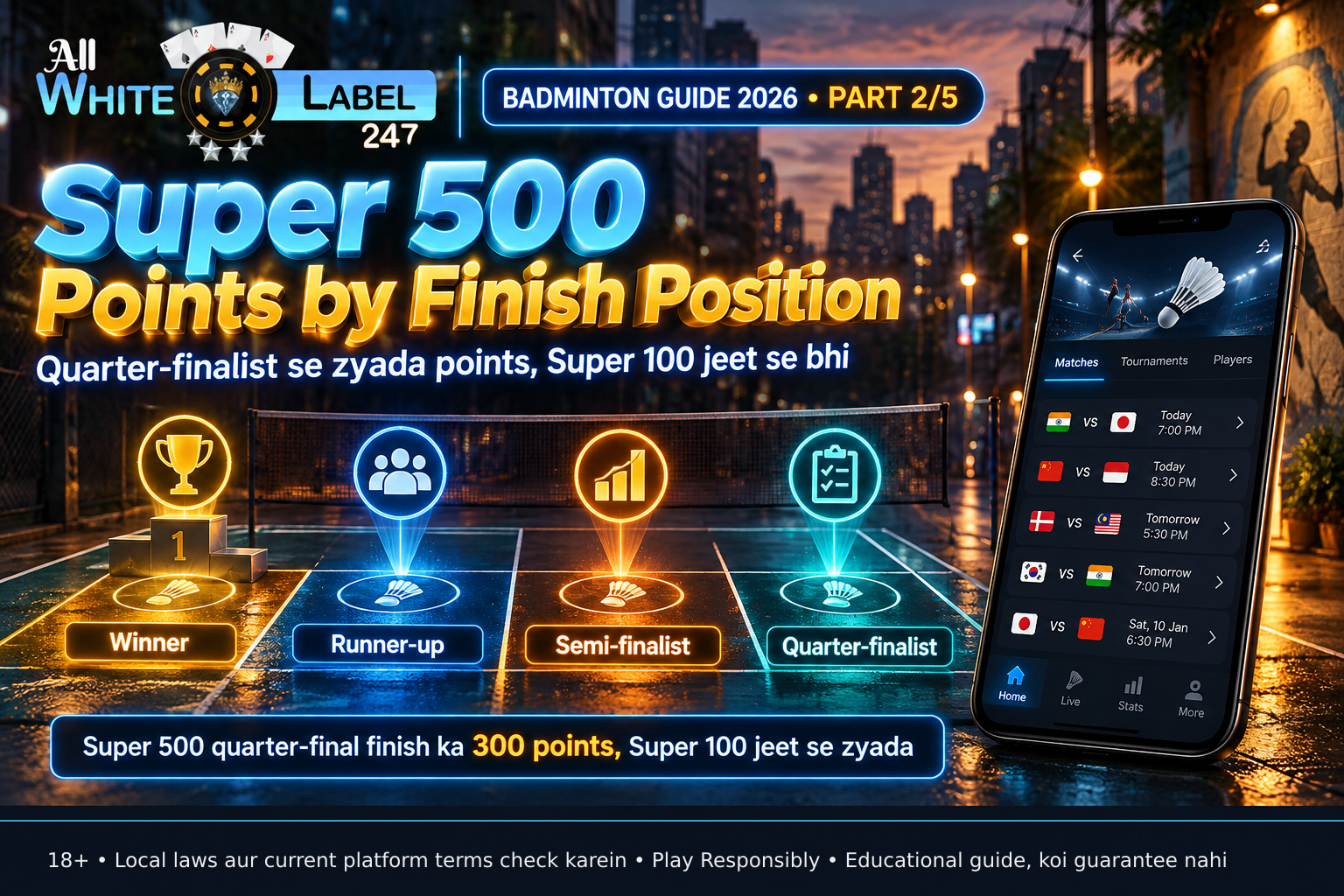
Points aren’t just for winners — they decrease progressively for each round. Here’s an example using a Super 500 tournament:
| Finish Position | Points Earned (Super 500) |
|---|---|
| Winner | 920 |
| Runner-up | 780 |
| Semi-finalist | 540 |
| Quarter-finalist | 300 |
| Last 16 | 140 |
| Last 32 | 60 |
| Last 64 | 20 |
This means even reaching the quarter-finals of a Super 500 (300 points) can be more valuable than winning a Super 100 (250 points) — a key consideration when planning your schedule.

How the World Ranking Is Calculated
Your BWF world ranking is not a simple average. It’s based on your best 10 results from the rolling 52-week period. Here’s how it works:
- Every tournament you play earns you points based on level and finish (as above).
- These points are active for exactly 52 weeks from the Monday after the tournament ends.
- Each week, the value of those points decreases slightly — this is called points decay.
- After 52 weeks, the points drop off completely.
- Your ranking is the sum of your highest 10 active results at any given time.
Example: How Points Decay Over Time
Let’s say you win a Super 500 (920 points) on January 1, 2026:
- Week 1: 920 points count fully
- Week 26: ~800 points count (approx. 13% decay)
- Week 52: 0 points (drops off)
If you don’t play another high-level tournament before that 52-week mark, your ranking could drop significantly — even if your skill hasn’t changed. This is why consistency matters: spreading strong results across the year prevents sharp ranking drops.
What This Means for Indian Players
For shuttlers based in India, the circuit presents both opportunities and constraints:
- Home advantage: Events like the India Open (Super 750) and Syed Modi International (Super 300) offer big points without international travel fatigue.
- Ranking bands matter:
- Top 1–8: Target World Tour Finals, Super 1000s for maintenance and glory
- Top 9–20: Mix Super 500/750 for steady growth; aim for Super 1000 deep runs
- Top 21–50: Prioritize Super 300s and Super 500s to build a reliable 10-result base
- Below 50: Use Super 100s and Internationals to break into the main draw of Super 300s
- Olympic qualification: For Paris 2024 (completed) and LA 2028, the BWF Race to Olympic standings uses a similar but modified points system over a defined window — knowing the tour levels helps you track your progress.
Device and Account Security (For BWF App and Related Platforms)
While this guide is educational, if you’re using the BWF app, tournament platforms, or fan engagement sites:
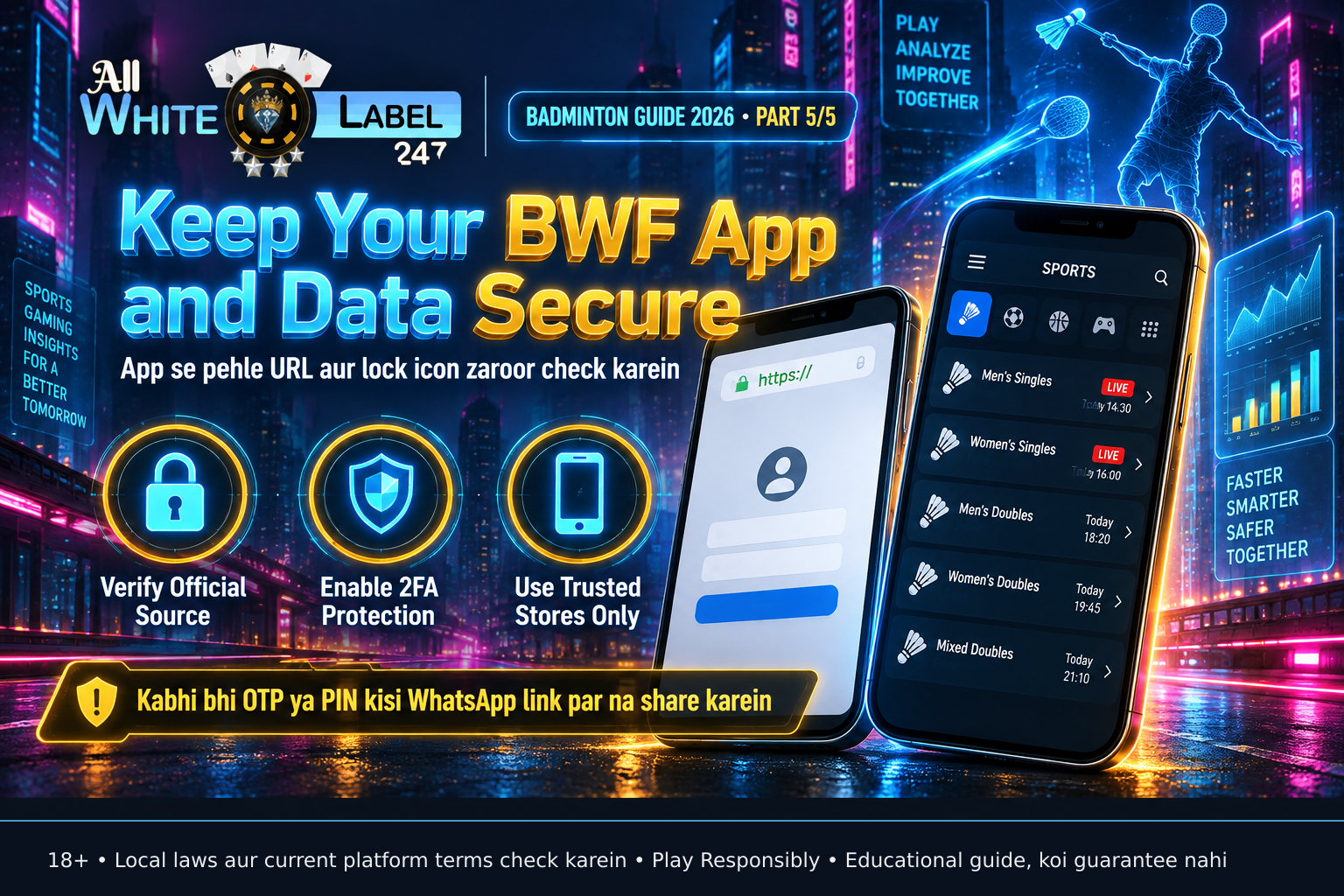
- Always verify the website URL starts with https:// and shows a padlock icon
- Enable 2FA (Two-Factor Authentication) if offered — never share your OTP or PIN
- Avoid downloading APKs from unverified sources; use official app stores (Google Play, Apple App Store)
- Never log in via third-party links sent over WhatsApp or Telegram — phishing is common
- Update your app regularly to patch security flaws

Common Mistakes to Avoid
- Chasing only big tournaments: Playing just one Super 1000 and resting the rest of the year often leads to ranking drops due to points decay and insufficient results.
- Ignoring lower tiers: Super 100s and Internationals are vital for building match practice and early points — especially if you’re outside the top 100.
- Not tracking expiry dates: A win six months ago is worth less than a recent quarter-final. Use the BWF rankings page to see when your points drop off.
- Confusing prize money with ranking points: A tournament might offer high prize money but low points (or vice versa) — always check both.
- Assuming ranking = form: You can be playing well but ranking low due to old points dropping off; or ranking high on past glory while current form dips.
Pre-Session Planning Checklist
Use this table before planning your tournament schedule or reviewing your ranking:
| Check | Action | Status (✓/✗) |
|---|---|---|
| 1 | Know your current BWF world ranking and points total | |
| 2 | Identify which 10 results are counting toward your ranking | |
| 3 | Check when your oldest point-earning result will drop off (52-week mark) | |
| 4 | Decide if you need a Super 300 (steady points) or Super 750/1000 (big jump) next | |
| 5 | Verify travel, recovery, and training load fit your chosen tournament level | |
| 6 | Confirm entry deadlines and qualification requirements for target events | |
| 7 | Ensure your BWF player profile is up to date (photo, nationality, etc.) |
Brand Section
This article is published on allwhitelabel247.com. If you are an operator or entrepreneur evaluating a white-label iGaming platform for sports or casino offerings, visit the brand section to fill in verified details about your platform’s offerings, licensing, payment integrations, and responsible-play tools. Never invent percentages, features, or sister brands — only state what you can verify from your official documentation or regulator registry.
Call to Action
Before your next training session or tournament planning meeting, take 10 minutes to review your BWF ranking breakdown and identify one actionable step — whether it’s targeting a specific Super 300 for consistency or saving up for a Super 750 attempt.
FAQ
How many tournaments do I need to play to maintain my ranking? There’s no fixed number, but to keep your best 10 results fresh, most top players aim for 15–20 tournaments a year. This allows for rotation, injury breaks, and strategic peaking while ensuring old results don’t drop off without replacement.
Can I lose ranking points if I withdraw from a tournament? No, you only lose points when they expire after 52 weeks or if you earn fewer points in a new tournament that replaces an older one in your best 10. Withdrawing before a tournament doesn’t remove existing points — it just means you miss a chance to earn new ones.
Is the India Open a Super 750 or Super 1000? As of the 2026 BWF calendar, the India Open is classified as a Super 750 event, offering 1,100 points to the singles winner and a prize fund of approximately $850,000 USD.
Do Super 100 tournaments count toward Olympic qualification? Yes, but indirectly. Super 100s earn BWF World Tour points that count toward your world ranking, which is used in the BWF Race to Olympic standings — though the Olympic qualification window may use a different cutoff and only counts results from a specific period.
Why do two players with the same number of tournament wins have different rankings? Because ranking points depend on both the level of the tournament and the finish position. A player with three Super 300 wins (610 × 3 = 1,830 points) may rank below someone with one Super 1000 win (1,200) and two Super 500 runner-ups (780 × 2 = 1,560), totaling 2,760 points — even with fewer titles.
How often is the BWF world ranking updated? The BWF world ranking is updated every Monday, reflecting the results from tournaments completed in the previous week. Points decay is applied weekly, so your total can shift even without playing.
What happens if I tie in points with another player? The BWF uses tie-breakers: first, the player with more points from Super 1000/World Tour Finals events ranks higher. If still tied, it goes to most Super 750 points, then Super 500, and so on — effectively rewarding performance at higher tiers.
Are Challenger events part of the BWF World Tour? No. Challenger events (formerly Grand Prix Gold and Grand Prix) are part of the BWF Continental Circuit and feed into the World Tour but do not award World Tour points. They offer lower prize money and are used for development and regional qualification.
Can I play both singles and doubles to earn more points? Yes, but points are calculated separately for each discipline. Your singles ranking, doubles ranking, and mixed doubles ranking are independent — strong performance in one doesn’t boost the others.
Where can I check my current BWF ranking and points breakdown? Visit the official BWF website (bwfbadminton.com) and go to the “Rankings” section. Select your discipline (Men’s/Women’s Singles, Doubles, Mixed Doubles) and search by name or nationality to see your points, ranking, and which tournaments are counting.
Does winning a Super 100 give more points than reaching the semi-finals of a Super 300? Winning a Super 100: 250 points. Semi-finalist in a Super 300: ~300 points (exact: 280 for SF in Super 300). So, a Super 300 semi-final earns slightly more than a Super 100 title — another reason to weigh effort against reward.
Is it better to play many Super 300s or fewer Super 500s for ranking growth? It depends on your current level. If you’re consistently reaching quarter-finals or better in Super 500s (300+ points), they offer faster growth. If you’re winning or reaching finals in Super 300s (610+ points), a few of those can beat inconsistent Super 500 appearances. Use your recent form to decide.
How does points decay actually work — is it linear or exponential? The BWF applies a weekly decay factor that reduces points by approximately 0.19% per week — not linear, but close to exponential decay. This means points lose value slowly at first, then slightly faster as they age, but the BWF publishes the exact decay table for transparency.
Final Takeaway
The BWF World Tour isn’t a ladder you climb by winning alone — it’s a system where consistency, smart scheduling, and understanding how points earn and fade determine your place among the world’s best. For Indian players, knowing the difference between a Super 300 quarter-final and a Super 100 final isn’t just trivia — it’s the foundation of a sustainable, informed badminton journey.
18+ and play responsibly. Always check current platform terms and local laws.
Sources:
- BWF Official Website: https://bwfbadminton.com – World Tour structure, points tables, ranking system (accessed 2026-09-14)
- BWF General Competition Regulations (2026): Sections 2.2 (World Tour), 2.4 (Ranking), 2.5 (Points decay)
- BWF Race to Olympic Standings Explained: https://bwfbadminton.com/article/olympic-qualification-pathway (accessed 2026-09-14)
<div class="creative">{"series": "SITE GUIDE 2026 • PART 1", "headline": "How Badminton Rankings Really Work", "subheadline": "Understand BWF tour levels, points decay, and what your world ranking actually means", "cards": [{"title": "Know Your Level", "text": "Super 100 to World Tour Finals: points differ by tournament tier and finish"}, {"title": "Best 10 Counts", "text": "Ranking = your top 10 results from the last 52 weeks, with points fading weekly"}, {"title": "Plan Smart", "text": "Mix Super 300s for steadiness and Super 750/1000s for jumps — based on your form"}, {"title": "Check Before You Play", "text": "Verify HTTPS, enable 2FA, avoid unverified APKs — security first"}, {"title": "No Guarantees", "text": "Ranking reflects past performance, not future wins — play responsibly"}]}</div>
required before publication.
Related reading
- Anant Chaturdashi 2026: What It Means for iGaming Operators in India (allwhitelabel247.io)
- Setting deposit and time limits 2026 (allwhitelabel247.io)
- Lottery Management Software Kaise Choose Karein? 2026 Buyer’s Guide (allwhitelabel247.io)
- Krishna Janmashtami 2026, Matki Se Mobile Tak (allwhitelabel247.io)