

Turnkey Gaming Solutions Kaise Kaam Karte Hain? From Backend Engine to Live User Experience
Ek user ne apne mobile ki screen par click kiya. Ek second mein uska balance cut hua aur agle hi second result uske saamne flash ho gaya. Bahar se dekhne mein yeh process itna smooth lagta hai jaise jaadu ho gaya. Lekin asal mein screen ke peeche hota kya hai?
Aaj kal online gaming platforms ek second mein millions of actions handle karte hain. Bade-bade servers, complex algorithms, real-time data feeds aur secure payment gateways ek saath milkar yeh experience create karte hain. Jo aapko ek simple button dikhai deta hai, uske peeche ek bahut bada technology system continuously kaam kar raha hota hai.
Is article mein hum us machine ko kholenge. Hum dekhenge ki ek turnkey gaming platform kaise kaam karta hai — user ke click karne se leke backend engine, APIs, admin panels aur agent networks tak. Agar aap ek entrepreneur hain, gaming business start karna chahte hain ya bas industry ki technology samajhna chahte hain, to yeh guide aapko poora picture clear kar degi.
Turnkey Gaming Solution Kya Hota Hai?
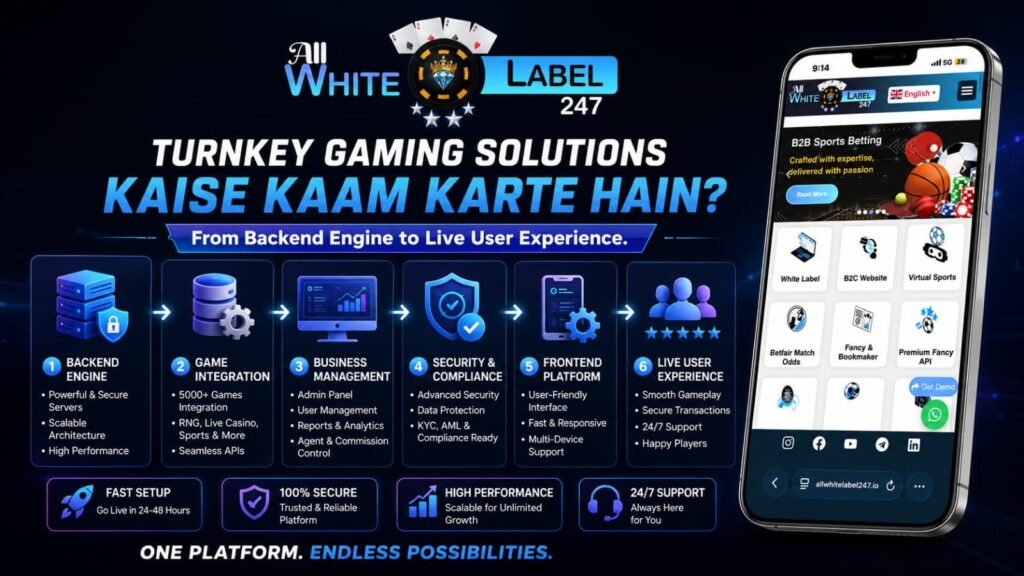
Turnkey gaming solution ek ready-to-deploy technology setup hota hai. Simple shabdon mein samjho to jab aap ek naya ghar banate hain, to aapko eent, cement, plumber, electrician sab kuch alag-alag dhoondhna padta hai. Lekin ek turnkey solution mein, aapko ek aisa ghar milta hai jisme sab kuch pehle se installed hai — bathroom se lekar light bulbs tak. Aap sirf chaabi lein aur ghar mein rehna shuru kar dein.
Waise hi, gaming industry mein ek turnkey sportsbook ya casino platform mein pehle se hi frontend (jo user dekhta hai), backend (jo engine chalata hai), games, payment integrations aur management panels setup ho chuke hote hain. Operator ko zero se coding nahi karni padti — woh sirf apni branding (naam, logo, colors) lagata hai aur platform live ho jaata hai. Isse development ka time aur cost dono bach jaate hain.
Platform Ka Complete Architecture
Ek gaming platform ko agar ek smart city samjhein, to uska architecture kuch is tarah banta hai:
- Frontend (Terminal): Yeh woh hissa hai jo user ke phone ya laptop par dikhta hai. Yahan buttons, odds, casino tables aur graphics hote hain.
- API Layer (Connecting Roads): Frontend aur backend ke beech communication ka bridge. API ka matlab hai Application Programming Interface — yani do software systems ke beech message bhejne ka tarika.
- Backend Engine (Power Grid): Yeh platform ka dil hai. Yahan par saare calculations, odds management aur result generation hota hai.
- Database (Record Room): Har user ka data, balance, history aur settings yahan save hoti hain.
- Admin & Master Panels (Control Room): Yahan se poore system ko control, monitor aur manage kiya jaata hai.
Jab user frontend par koi action leta hai, to request API ke through backend mein jaati hai. Backend database se user ki details check karta hai, action process karta hai aur result wapas frontend par bhej deta hai. Yeh sab milliseconds mein hota hai.
Frontend Se Backend Tak User Journey
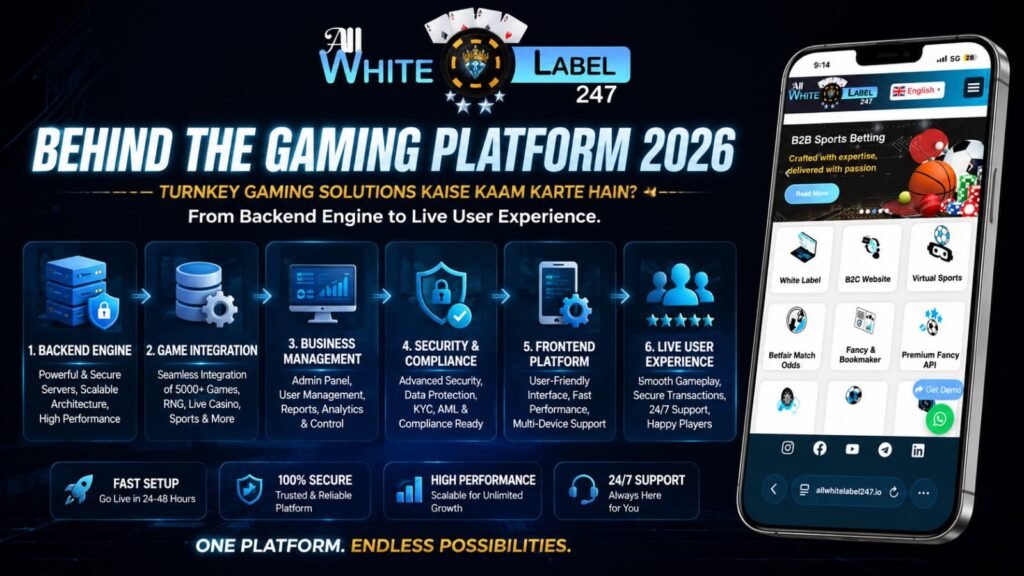
Ek user jab platform par login karta hai aur koi action (jaise game khelna) perform karta hai, to system ke andar ek step-by-step journey hoti hai:
- User Action: User “Place Bet” ya “Spin” button click karta hai.
- Frontend Request: Frontend turant ek secure encrypted signal API layer ki taraf bhejta hai — “Yeh user itna amount lagana chahta hai.”
- Balance Verification: Backend engine pehle database mein check karta hai ki user ke wallet mein itna balance hai ya nahi.
- Risk Check: Agar balance hai to system risk management rules check karta hai — dekhta hai ki yeh bet platform limits ke andar hai ya nahi.
- Acceptance & Update: Agar sab sahi hai to bet accept hoti hai, user ka balance cut ho jaata hai aur database mein record save ho jaata hai.
- Result Delivery: Jab game/result aata hai to backend calculate karta hai ki user jeeta ya haara. Agar jeeta, to wallet update hota hai aur frontend par success message dikhata hai.
Yeh poora cycle itni tezi se hota hai ki user ko lagta hai sab kuch instant hua — lekin asal mein 4-5 alag-alag systems ne milkar milliseconds mein communication ki hoti hai.
API Layer Ka Role
Gaming API ek platform ki lifeline hai. Maan lo aapke platform mein kisi aur company ka casino game chalana hai — to kya aap unka pura software apne server par install karoge? Nahi. Yahan APIs kaam aati hain.
API ek waiter ki tarah hai. User aapke restaurant (frontend) mein baithta hai, menu dekhta hai aur order deta hai. Waiter (API) wo order kitchen (doosri company ke server) tak le jaata hai. Wahan dish ban jaati hai aur waiter wapas use user tak pahuncha deta hai.
Sportsbook API real-time odds provide karti hai. Casino API live dealer tables aur slot games stream karti hai. Payment API aapke wallet ko bank se connect karti hai. Bina APIs ke, ek modern gaming platform exist hi nahi kar sakta.
Sportsbook Aur Casino Engine
Backend ka sabse heavy hissa yeh engine hota hai.
Sportsbook Software: Yeh engine live matches ka data feed collect karta hai (jaise kitne runs hue, kitne players out hue). Us data par complex mathematical calculations chala kar odds (bhav) generate karta hai, jo frontend par live update ki jaati hain.
Casino Software: Yahan game logic hota hai. Ek Random Number Generator (RNG) system hota hai jo decide karta hai ki card kaun sa aayega ya roulette wheel kahan rukega. Yeh engine ensure karta hai ki game fair ho aur koi cheat na kar sake.
Payment Aur Transaction Layer
Payment layer ek high-security zone hota hai. Yahan har transaction encrypted hoti hai. Jab user deposit karta hai, to payment gateway API backend ko signal bhejti hai aur backend user ka wallet credit karta hai. Withdrawals mein admin panel se verification hoti hai, KYC check hota hai aur phir payment process hoti hai. Yeh layer fraud detection aur AML (Anti-Money Laundering) checks bhi handle karta hai.
B2C Magic: Jab Backend Engine User Ke Haath Mein Auto-Pilot Mode Mein Aa Jaati Hai
Humne abhi dekha ki backend engine aur APIs screen ke peeche kaise ek control room ki tarah kaam karte hain. Lekin asli magic tab hota hai jab yeh heavy technology seedha end-user (player) ke experience mein badal jaati hai. Ek player ko server architecture ya API integration se koi lena-dena nahi — use bas ek cheez chahiye: speed aur rewards.
AllWhiteLabel247 ka B2C ecosystem exactly isi philosophy par build hua hai. Maan lo ek player raat ke 2 baje game khel raha hai aur uska balance khatam ho jaata hai. Usne UPI se paise daale aur blink karte hi uska wallet update ho gaya — yeh auto deposit ki power hai. Game khatam hua, usne withdrawal ka button dabaya aur bina kisi manual admin approval ke, seconds mein paise uske account mein aa gaye. Yeh auto withdraw feature user ke dil mein solid trust build karta hai, kyunki aajkal players wait karne wale nahi hain.
Lekin technology yahin nahi rukti. Platform par retention badhane ke liye ek smart auto bonus system chalta hai. Jaise hi user koi action leta hai, system khud calculate karke usko reward deta hai. Har baar paisa daalne par user ko every-deposit bonus milta hai, jo usko aur khelne ke liye push karta hai. Agar kisi hafte luck saath nahi di, to platform uska morale boost karne ke liye weekly loss-back offer deta hai. Aur jab wo apne doston ko bulata hai, to referral bonus turant uske wallet mein aa jaata hai.
Yahan sabse khaas baat yeh hai ki jab aap platform launch karte hain, to aapko ek base B2C panel milta hai jisme auto deposit aur row-wise (downline) bonus calculation dono built-in hote hain. Iska matlab hai ki user ka deposit apne aap process ho raha hai, aur uske neeche jo bhi network ban raha hai, uska bonus bhi system khud calculate karke distribute kar raha hai. Koi manual entry nahi, koi delay nahi — system sab kuch real-time mein handle karta hai, jisse player khush rehta hai aur aapka business apne aap grow karta hai.
Admin Panel (Control Room)
Admin panel woh dashboard hai jahan se operator poora business dekhta hai — screen ke peeche chalne wala control room. Admin panel kya karta hai?
- User Management: Naye users verify karna, unki KYC check karna, accounts block/unblock karna.
- Financial Tracking: Kitna paisa aaya, kitna gaya — sabka live ledger.
- Risk Control: Khud ki limits set karna (maan lo ek match par max kitna lagaya ja sake).
- Reporting: Daily, weekly profit/loss reports dekhna.
Master, Super Master Aur Agent Hierarchy
Bade gaming networks mein users direct platform tak nahi pahunchte — wahan ek distribution chain hoti hai. Yeh multi-agent management system kehlata hai.
- Super Master: Sabse upar ka level. Inke paas max limit hoti hai. Yeh apne neeche Masters banate hain.
- Master: Yeh Super Master ke neeche aate hain. Yeh apni limits Agents mein distribute karte hain.
- Agent: Yeh direct end-users (players) ko handle karte hain — user ko chips/credit dete hain aur winnings collect karte hain.
Har level ka apna dashboard hota hai. Agent sirf apne users dekh sakta hai, jabki Super Master poore tree ka data dekh sakta hai. Isse operational load divide ho jaata hai aur local players ko personal support milta hai.
User Management, Risk Aur Real-Time Monitoring
Backend mein ek continuous monitoring system chalta rehta hai. Agar koi user achanak bohot badi amount lagata hai ya ek hi IP se 100 accounts ban jaate hain, to risk engine alarm raise karta hai. Real-time dashboards par graphs chalte hain jo server load, active users aur current risk exposure dikhate hain — isse platform crash hone se bachaya jaata hai.
Mobile Aur Real-Time User Experience
Aajkal 90% traffic mobile se aati hai. Turnkey platforms mobile-first design mein aate hain. Frontend lightweight hota hai taaki 3G network par bhi fast load ho. Real-time data (live odds change) WebSocket technology se stream hota hai, jisse page refresh na karna pade. User experience tab perfect hota hai jab app mein zero lag ho aur animations smooth chalein.
Turnkey vs Custom Comparison
| Feature | Turnkey Platform | Custom Platform |
|---|---|---|
| Initial Setup | Fast aur ready-to-launch | Zero se architecture design karna padta hai |
| Development Effort | Minimal — sirf branding lagana hota hai | Bohot zyada — developers, testers ki team chahiye |
| Customization | Limited — jo features provider de, wahi use karne padte hain | Unlimited — code level par kuch bhi change kiya ja sakta hai |
| Time to Launch | Days ya weeks mein live ho jaata hai | Months ya saal bhi lag sakte hain |
| Maintenance | Provider handle karta hai (server updates, bugs) | Khud ki IT team rakhni padti hai |
| Scalability | Provider ke infrastructure par depend karta hai | Apne server purchase karke scale karna padta hai |
| Control | Usually source code access nahi hota | 100% control aur source code ownership |
| Technical Resources | Koi special IT team nahi chahiye | In-house tech team mandatory hai |
| Cost | Setup cost low, monthly revenue-share ya fixed fee model | Initial cost bohot high (lakhs/crores), baad mein sirf server cost |
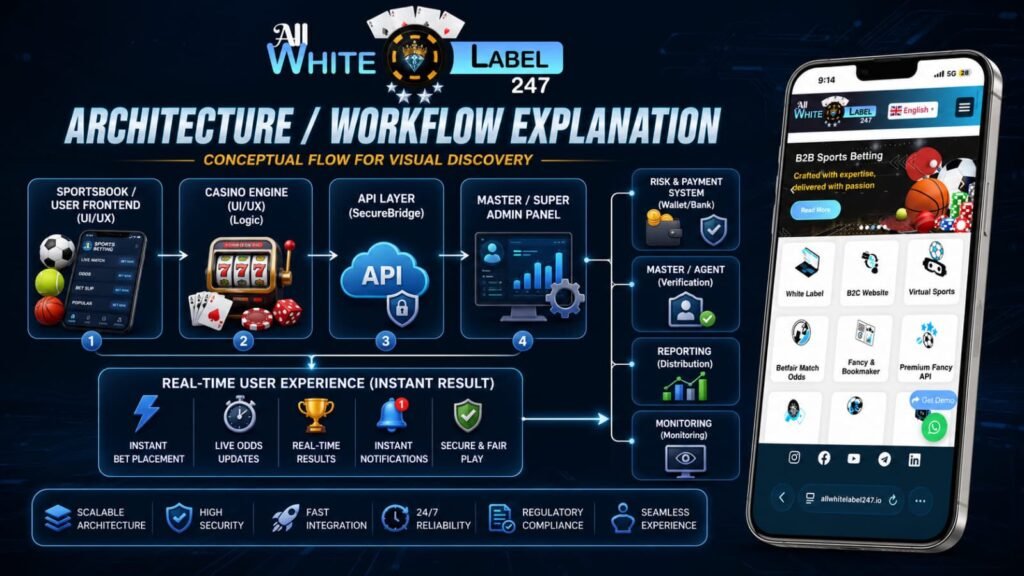
Platform Workflow at a Glance
User Frontend (UI/UX) → API Layer (Secure Bridge) → Sportsbook/Casino Engine (Logic) → Payment System (Wallet/Bank) → Admin Panel (Verification) → Master/Super Master/Agent (Distribution) → Risk & Reporting (Monitoring) → Real-Time User Experience (Instant Result)
Turnkey Gaming Platform Choose Karne Se Pehle — 15-Point Checklist
- Technology Architecture: Kya platform cloud-based aur scalable hai?
- API Capability: Kya third-party games easily integrate ho sakte hain?
- Scalability: Kya traffic spike ke time server crash nahi hoga?
- Admin Controls: Kya admin panel se har choti cheez control ho rahi hai?
- User Management: Kya KYC/AML tools built-in hain?
- Reporting: Kya real-time P&L aur risk reports mil rahe hain?
- Payment Integrations: Kya multiple gateways aur cryptocurrencies support hain?
- Security: Kya SSL, DDoS protection aur data encryption hai?
- Data Protection: Kya user data safely store ho raha hai?
- Mobile Experience: Kya mobile interface smooth aur app jaisa hai?
- Support: Kya technical support 24/7 available hai?
- Customization: Kya branding aur themes change kar sakte hain?
- Documentation: Kya operator ke liye training manuals mil rahe hain?
- Compliance Requirements: Kya platform responsible gaming tools deta hai?
- Long-Term Maintenance: Kya future updates provider ke side se free honge?
AllWhiteLabel247 Ecosystem
Jab hum robust technology aur platform solutions ki baat karte hain, to AllWhiteLabel247 ek education aur technology-driven ecosystem represent karta hai. Yahan focus sirf software bechne par nahi, balki operators ko gaming infrastructure ki poori samajh dena hai.
Is ecosystem mein kai digital platforms aur domains shamil hain jo apne-apne distinct roles perform karte hain — jaise user experience aur accessibility par focused platforms, sportsbook-specific operations wale platforms, aur ek dedicated customer care touchpoint jo user queries handle karta hai. Har brand ka apna operational focus hai, lekin sab milkar yeh centralized platform ecosystem form karte hain.
Note: Offer availability, eligibility aur applicable terms publication se pehle verify kiye jaane chahiye. Offers profits guarantee nahi karte.
FAQs
Q1: Turnkey gaming solution kya hota hai?
Ek ready-to-use platform setup jisme frontend, backend, games aur payment systems pehle se built-in hote hain. Operator sirf branding lagakar business start kar deta hai.
Q2: Turnkey aur custom gaming software mein kya difference hai?
Turnkey fast aur low-cost hota hai (limited customization ke saath), jabki custom software banne mein months lagte hain par 100% customized hota hai.
Q3: Gaming platform mein API ka kya role hota hai?
API frontend aur backend ya doosre game providers ke beech data transfer karwati hai — jaise live odds update karna ya payment verify karna.
Q4: Admin panel kya karta hai?
Admin panel operator ka control room hai, jahan se wo users, payments, risk aur reports manage karta hai.
Q5: Master panel aur Admin panel mein kya farq hai?
Admin platform ka malik hai, jabki Master ek distributor hai jo apne neeche agents aur users manage karta hai.
Q6: Super Master panel kya hota hai?
Yeh sabse upar ka distribution level hota hai jahan se poore agent tree aur large-scale credit flow ko control kiya jaata hai.
Q7: Multi-agent gaming platform kaise kaam karta hai?
Isme ek hierarchy hoti hai (Super Master → Master → Agent → User). Har level apne neeche wale ko credits deta hai aur commission manage karta hai.
Q8: Gaming platform mein payment system kaise kaam karta hai?
Payment gateways API ke through backend se connect hote hain. Deposit instant credit hota hai, jabki withdrawals admin verification ke baad process hote hain.
Q9: Real-time gaming platform mein data itni jaldi kaise update hota hai?
WebSocket technology aur fast servers ke use ki wajah se, data backend se directly frontend par bina page refresh kiye stream hota hai.
Q10: Turnkey platform launch hone mein kitna time lagta hai?
Agar documentation aur branding ready ho, to ek turnkey platform kuch dinon ya weeks mein live ho sakta hai.
Q11: Kya turnkey platform ko customize kiya ja sakta hai?
Haan, limited extent tak. Aap logo, colors aur kuch specific features change karwa sakte hain, par core code change nahi hota.
Q12: Backend engine kya karta hai?
Yeh sabse important hissa hai jo odds calculate karta hai, bets accept karta hai, risk check karta hai aur results declare karta hai.
Q13: Risk management system platform mein kaise kaam karta hai?
Yeh system unusual betting patterns detect karta hai aur operators ko max limits set karne deta hai taaki badi financial loss na ho.
Q14: Platform choose karte waqt sabse zaroori kya check karna chahiye?
Platform ki security (SSL, encryption), scalability, aur provider ki technical support quality.
Q15: Frontend aur backend communicate kaise karte hain?
Frontend user ka request bhejta hai. API wo request backend tak pahunchati hai aur backend process karke result API ke through wapas frontend bhej deta hai.
Q16: Kya turnkey platform mobile-friendly hota hai?
Haan, aaj ke zamaane mein modern turnkey platforms mobile-first design ke saath aate hain taaki phone par seamless experience mile.
Q17: User ka data gaming platform mein safe hota hai?
Industry-standard platforms encryption (jaise SSL) data protect karne ke liye use karte hain, par operator ko bhi KYC/AML rules follow karne padte hain.
Key Takeaways
- Turnkey solutions ready-made platforms hain jo zero se coding ki zaroorat khatam karte hain.
- Ek smooth user experience ke peeche frontend, API, backend engine aur payment layers milliseconds mein communication karte hain.
- Admin aur Master panels operators ko decentralized control dete hain.
- Custom platform flexible hota hai, par turnkey fast aur cost-effective hai.
- Platform choose karne se pehle security, scalability aur support check karna mandatory hai.