

White Label Betting Platform Ko Hackers, Fraudsters Aur Data Breach Se Kaise Bachayein?
Gaming Platform Cybersecurity Essentials
Gaming cybersecurity infrastructure protections, data encryption protocols, AI risk management, aur identity verification mechanisms ka collective set hai jo betting platforms ko unauthorized access aur cyberattacks se protect karta hai.
IPL Final Ka High-Voltage Match Aur Ek Gaming Operator Ka Sabse Bada Sapna (Aur Phir DDoS Attack!)
IPL ka grand final chal raha hai. Aapki online betting website par tens of thousands of active users live match par bets place kar rahe hain. Har second mein hazaron rupaye ka transaction volume handle ho raha hai. Aapka admin panel bilkul packed hai, aur aap soch rahe hain ki aaj revenue saare purane records tod dega.
Yekdum, sudden crash! Website response dena band kar deti hai. Customer support channel par shikayaton ki baadh aa jati hai: “Mera balance deduct ho gaya par bet place nahi hui!”, “Site open nahi ho rahi!”, “Kya mera paisa doob gaya?”
Aap apne technical team ko call karte hain, aur pata chalta hai ki aapki site par ek massive Distributed Denial of Service (DDoS) attack aur credential stuffing breach hua hai. Hackers aapke database se player information, payment credentials aur wallet funds exploit kar rahe hain. Sirf 15 minute ke downtime mein aapne lakhs ka revenue aur saalon se kamaya hua user trust gawa diya.
Ye koi fictional story nahi hai. 2026 mein online gaming startups, platform resellers aur sportsbook operators ke liye digital security ki reality bilkul yahi hai. Hackers aur automated fraud bots ab simple viruses nahi bhejte — wo advanced AI-driven tools ka use karke betting platforms ki vulnerabilities ko target karte hain.
White label gaming operators platform ki security ke liye kya karte hain?
White label gaming operators ko DDoS mitigation, WAF, MFA, SSL, aur AI fraud detection jaisi multi-layered security deploy karni chahiye taaki platform assets secure rahein aur player trust build ho.
Practical Example: Cloudflare Magic Transit ko AI-based rate-limiting ke saath implement karne se high-traffic sports events ke dauran 99.9% automated bot attacks prevent ho jaate hain.
Security ek expense nahi, balki online gaming mein long-term profitability aur reputation ka foundational pillar hai.
Cybersecurity Basics for Gaming Operators: A-to-Z Fundamentals
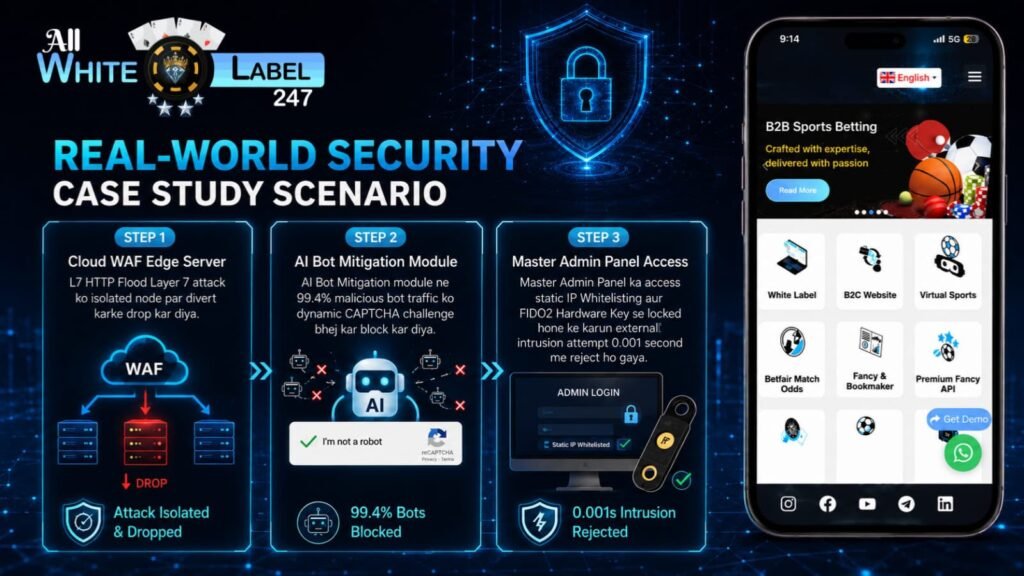
Chaliye cybersecurity ko aasan tareeqe se samajhte hain. Sochiye ki aapka iGaming platform ek high-security digital bank-cum-casino hai. Is bank mein teen sabse keemti cheezein hain:
- Player Real Money Vault — Users ke deposited funds, winning payouts, aur payment gateway integrations.
- Confidential Player Data — KYC documents, phone numbers, passwords, aur betting history.
- Platform Integrity & Logic — Betting odds engine, casino game algorithms, admin rules, aur bonus credit systems.
Cybersecurity ka simple matlab hai is digital bank ke har darwaze, khidki aur vault par smart digital guards lagana. Agar aapka platform insecure hai to hackers vulnerabilities ka fayda uthakar data leak, wallet draining ya system crash kar sakte hain.
Modern white label platforms — jaise AllWhiteLabel247 — inherently security-first architecture par design kiye jaate hain, jisse non-technical gaming business owners ko bhi enterprise-level security milti hai.
Why Cybersecurity Matters in 2026: The Changing iGaming Threat Landscape
2026 mein cybersecurity pehle se kahin zyada critical ho gayi hai. Iske 4 main reasons hain:
- AI-Powered Botnet Attacks — Hackers ab humanly impossible speed par automated scripts run karte hain jo 1 second mein 10,000 login passwords guess kar sakti hain.
- Cross-Border Regulatory Compliance — International licenses (Curacao, Malta, Anjouan) aur local payment partners strict data encryption (AES-256) aur KYC/AML verification demand karte hain.
- Instant Payment Gateways & Micro-Withdrawals — UPI, crypto aur automated e-wallets ki wajah se speed badhi hai, par fraud detection ke liye milliseconds mein automated risk evaluation zaroori ho gaya hai.
- Zero Tolerance for Downtime — Cricket T20 World Cup, IPL ya live dealer casino games ke dauran 5 minute ka downtime bhi platform ki reputation permanently kharab kar sakta hai.
Gaming operator apni betting website secure kaise kare?
SSL encryption, Web Application Firewall (WAF), cloud DDoS protection, strict KYC aur Multi-Factor Authentication (MFA) enforce karke.
Practical Action: Hamesha ek enterprise White Label Gaming Provider chunein — jaise AllWhiteLabel247 — jo built-in WAF, encrypted APIs, aur automated fraud prevention systems provide karta ho.
Biggest Cyber Threats Facing Gaming Operators in 2026
Apne enemy ko jaane bina defence taiyar karna namumkin hai. Aaiye industry ke 7 sabse dangerous cyber threats ko samajhte hain:
- DDoS Attacks — Hackers hazaron compromised devices (botnets) se aapki website par fake traffic flood kar dete hain, jisse server overload ho jaata hai aur genuine players site access nahi kar paate. Live sports events par ye sabse zyada hote hain.
- Credential Stuffing & Brute Force Attacks — Kisi dusri website se leaked usernames/passwords dark web par milte hain aur bots ke zariye wahi combinations aapke betting site par try kiye jaate hain. Lagbhag 60% log same password reuse karte hain, isliye hackers accounts hijack kar lete hain.
- Payment & Bonus Abuse Fraud — Fraudsters multi-accounting, VPN switching aur stolen cards/fake UPI handles ka use karke signup bonuses, cashbacks aur referral rewards abuse karte hain.
- API Vulnerabilities & Manipulation — Agar API endpoints unencrypted hain ya proper authentication lack karte hain, to attackers odds values alter ya balance manipulate kar sakte hain.
- Ransomware & Database Extortion — Ransomware operator ke internal system/database mein ghus kar sensitive data encrypt kar deta hai aur crypto ransom demand karta hai.
- Phishing & Social Engineering (Admin Target) — Fake WhatsApp, Telegram ya email messages bhej kar admin login credentials chura liye jaate hain.
- Insider Threats & Master Agent Misuse — Agar Role-Based Access Control (RBAC) missing hai, to disgruntled staff ya dishonest master agents credit limits badha sakte hain ya fake settlement report kar sakte hain.
21 Cybersecurity Best Practices for Gaming Operators — Complete 2026 Guide
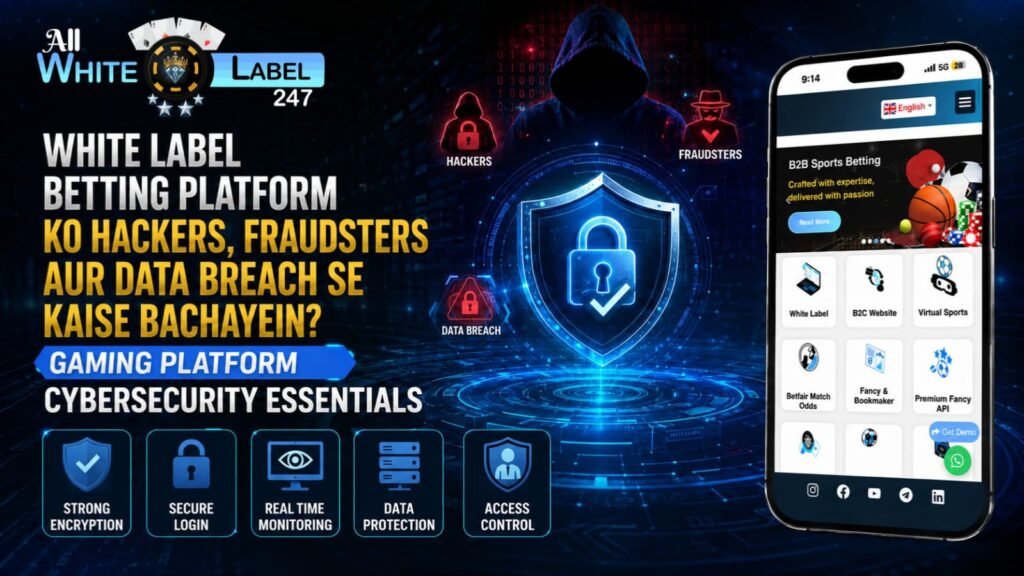
Aapke betting business ko impenetrable fortress banane ke liye ye 21 battle-tested best practices, 5 categories mein baante gaye hain:
Category A: Infrastructure & Perimeter Security
- Full-Site SSL/TLS Encryption — HTTPS ke bina koi bhi website par user data safe nahi. Hamesha TLS 1.3 with 256-bit encryption use karein.
- Enterprise Web Application Firewall (WAF) — Cloudflare ya AWS WAF SQL Injection, XSS aur malicious bots ko edge server par hi block kar dete hain.
- Multi-Layered DDoS Mitigation — L3/L4 network layer aur L7 application layer protection apply karein.
- Secure Isolated Cloud Hosting — Multi-tenant public hosting ki jagah gaming-optimized, isolated cloud nodes (AWS, GCP, DigitalOcean) use karein.
- Zero Trust Architecture (ZTA) — “Never Trust, Always Verify.” Har API call aur admin request authenticate honi chahiye.
Category B: User & Identity Protection
6. Mandatory MFA/2FA — Admin, Master Agent aur High-Value Player accounts ke liye Authenticator App ya OTP compulsory karein.
7. Advanced Password Hygiene & Biometric Login — Minimum 10 characters ke strong passwords enforce karein aur fingerprint/Face ID login support karein.
8. Session Management & Auto-Logout — Inactivity timer (e.g., 15 minutes) set karein aur IP change par session auto-terminate karein.
9. Device Fingerprinting — Browser fingerprint, screen resolution, OS aur canvas hash record karke unknown device login alerts trigger karein.
Category C: Payment & Financial Integrity
10. Automated KYC & Identity Verification — AI-powered Aadhaar/PAN/Passport OCR verification se duplicate accounts rokein.
11. Real-Time AML Monitoring — Deposit/withdrawal velocity aur blacklisted wallet addresses detect hone par account freeze trigger ho.
12. Tokenized Payment Gateway Integration — Card/UPI credentials ko PCI-DSS compliant tokenization ke through handle karein.
13. Multi-Sign & Escrow Withdrawal Approval — Large payouts ke liye manual double-authorization protocol apply karein.
Category D: API, Code & System Security
14. Secure API Gateways with Mutual TLS (mTLS) — Odds engines aur game providers ke saath HMAC signatures aur IP whitelisting ka use karein.
15. Regular Penetration Testing & Vulnerability Assessment — Quarterly third-party ethical hacking audits conduct karein.
16. Automated Source Code Scanning (SAST/DAST) — CI/CD pipeline mein security tools integrate karein.
17. Immutable Database Backups & Point-in-Time Recovery (PITR) — Daily encrypted cross-region offsite backups se ransomware ke case mein 5 minute mein recovery ho sake.
Category E: Operational & Administrative Security
18. Strict Role-Based Access Control (RBAC) — Sub-admins/master agents ko sirf utni hi permissions dein jitni zaroori hain (Least Privilege Principle).
19. Comprehensive Audit Trail & SOC Monitoring — Har admin action, bet, balance edit ka timestamp aur IP ke saath log rakhein.
20. Security Awareness Training for Staff — Team ko phishing, fake IDs aur social engineering pehchanne ki training dein.
21. 24/7 Incident Response Plan (IRP) — Breach ki surat mein communication, containment, backup restore aur legal reporting ke protocols pehle se ready rakhein.
AI Fraud Detection & Risk Management
Artificial Intelligence in iGaming Risk Management
AI Fraud Detection machine learning algorithms ka deployment hai jo user interactions, transactions aur betting behavior ko continuously analyze karke security threats ko real time mein automatically flag aur stop karta hai.
AI-driven risk management manual withdrawal review times ko 80% tak kam karta hai, jabki fraud losses near-zero rehte hain.
Traditional rule-based systems sophisticated hackers ke saamne fail ho jaate hain. AI algorithms milliseconds mein lakhon transactions scan karke unusual betting patterns identify karte hain — jaise ek hi IP se simultaneous opposite bets, ya high-frequency withdrawal micro-requests.
AI anti-fraud systems monitoring kaise karte hain?
Player bet velocities, device fingerprints aur payment channels monitor karke, bonus abuse, syndicate betting aur account takeovers ko financial loss se pehle rokte hain. Jab ek user Delhi se login karta hai aur 2 minute baad London se withdrawal attempt karta hai, AI risk scoring turant withdrawal freeze kar deta hai aur liveness verification maangta hai.
Compliance, KYC, AML & Payment Security
Financial security aur legal compliance ek hi sikke ke do pehlu hain. Licensing boards (Curacao, MGA, Anjouan) aur payment aggregators tabhi kaam karenge jab regulatory compliance watertight ho.
- KYC (Know Your Customer) — Document parsing + AI liveness check, duplicate IDs aur synthetic identity fraud eliminate karta hai.
- AML (Anti-Money Laundering) — Automated transaction threshold monitors suspicious money churning detect karte hain.
- PCI-DSS Compliance — Payment gateway standard jo card aur banking data ko fully encrypted rakhta hai.
Real-World Security Case Study
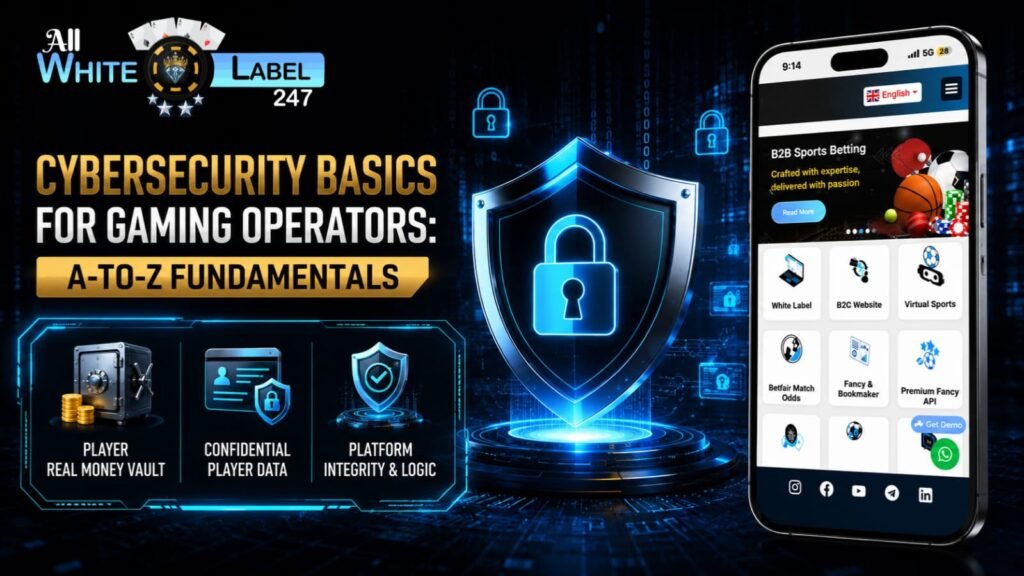
Ek emerging sportsbook platform ne T20 World Cup ke dauran achanak 10x traffic spike observe kiya, saath hi backend par millions fake API calls hit hone lage. Multi-layered security architecture ne:
- Step 1: Cloud WAF ne L7 HTTP Flood attack ko isolated node par divert karke drop kiya.
- Step 2: AI Bot Mitigation module ne 99.4% malicious bot traffic ko dynamic CAPTCHA se block kiya.
- Step 3: Master Admin Panel access static IP whitelisting aur FIDO2 hardware key se locked hone ki wajah se intrusion attempt 0.001 second mein reject ho gaya.
Result: Zero downtime, zero player fund loss, aur tournament ke dauran record revenue.
Future Trends in Gaming Cybersecurity 2026–2030
- Post-Quantum Cryptography (PQC) — Quantum computers ke encryption-cracking attacks ko counteract karne ke liye next-gen cryptographic keys.
- Continuous Behavioral Biometrics — Typing speed, touch pressure aur navigation dynamics continuously evaluate karke Account Takeover instantly flag karna.
- Web3 & Automated Smart Contract Audits — Blockchain-based decentralized sportsbooks aur transparent odds auditing.
Gaming Operator Security Baseline Checklist
- Full site TLS 1.3 encryption with forced HSTS headers
- Mandatory Authenticator App 2FA & static IP whitelisting for admin/agent panels
- Active Cloud WAF with OWASP Top 10 mitigation rules
- Dynamic OAuth2 authorization tokens & HMAC request signing
- PCI-DSS Level 1 compliant tokenized payment flow
- AES-256 encryption at rest & daily cross-region offsite backups
- AI anomaly detection active for deposits, wagers, and withdrawal velocities
Common Mistakes Gaming Operators Make
- Relying only on basic SMS OTP — Vulnerable to SIM-swapping. Always enforce authenticator apps/hardware keys.
- Leaving default admin paths — Generic paths (e.g., /admin) are easily found by hack bots. Use custom, obscured URLs.
- Delaying security updates — Delayed patches leave known zero-day exploits open.
- Unlimited agent credit line access — Without RBAC, fraud risk from master agent distribution increases significantly.
Expert Tip
“Security ek project nahi, ek continuous operational mindset hai. System layers ko dynamic sandboxing mein rakhein, baseline privileges minimize karein, aur hamesha assume karein ki external bad actors aapke entry points test kar rahe hain.” — Senior iGaming Security Architect
FAQs
Q1: What is gaming cybersecurity?
Gaming cybersecurity technologies aur operational practices ka framework hai jo betting engines, user databases aur payment channels ko illegal access, financial fraud aur cyberattacks se protect karta hai.
Q2: Why do betting operators need cybersecurity?
Betting platforms large financial transactions aur sensitive data handle karte hain, isliye hackers ke liye attractive target hote hain. Strong cybersecurity monetary loss, identity theft, brand damage aur regulatory penalties se bachati hai.
Q3: How does cybersecurity protect a sportsbook?
Live betting transactions ko encrypt karke, DDoS attacks block karke, API validation se odds manipulation rok kar, aur MFA se unauthorized access stop karke.
Q4: Kya white label betting platform secure hota hai?
Haan, agar provider SSL/TLS encryption, cloud WAF, isolated database storage aur regular penetration testing use karta ho. Security level technology partner ki infrastructure par depend karti hai.
Q5: Operators platform security kaise evaluate kar sakte hain?
VAPT audit certificates request karke, WAF/DDoS infrastructure review karke, encryption standards check karke, aur API authentication protocols verify karke.
Q6: White label provider ko kaun se security features offer karne chahiye?
Cloud WAF, automated DDoS mitigation, TLS 1.3, MFA, RBAC, dynamic API key validation, aur AI fraud monitoring.
Q7: Betting websites online payments kaise protect karti hain?
Tokenized PCI-DSS compliant gateways, SSL encryption, KYC verification, aur AI-based suspicious behavior detection ke through.
Q8: Payment gateway security kya hoti hai?
Wo protocols, encryption standards aur fraud filters jo processing ke dauran financial data ko protect karte hain — jaise 3D-Secure 2.0, dynamic fraud scoring, tokenization aur API payload signing.
Q9: Operators payment fraud kaise kam kar sakte hain?
Device fingerprinting, withdrawal velocity checks, mandatory KYC matching, AI anomaly detection aur tokenized processing combine karke.
Q10: AI fraud detect karne mein kaise help karta hai?
User behavior, login patterns aur transaction speeds ko real-time analyze karke bot activity, account takeovers aur bonus abuse jaisi anomalies identify karta hai.
Q11: SSL encryption kya hai?
Ek security protocol jo browser aur server ke beech encrypted link banata hai. Modern deployments TLS 1.3 use karti hain.
Q12: HTTPS kya hota hai?
HTTP ka encrypted version jo SSL/TLS certificates ka use karke communication secure karta hai.
Q13: MFA kya hota hai?
Users se account access se pehle do ya zyada verification steps maangna, jisse password compromise hone par bhi unauthorized login rukta hai.
Q14: Zero Trust Security kya hai?
Ek security model jahan har access request ke liye strict identity verification zaroori hoti hai — “never trust, always verify.”
Q15: Web Application Firewall (WAF) kya hota hai?
Web application aur internet ke beech ek protective shield jo SQL injection aur XSS jaise attacks ko rokta hai.
Q16: DDoS protection kya hoti hai?
Traffic spikes absorb karne ke liye specialized network infrastructure jo malicious bot traffic ko real player traffic se alag karti hai.
Q17: Secure APIs kyun zaroori hain?
Ye third-party providers ke saath data pathways ko protect karti hain, jisse attackers odds ya balances alter nahi kar paate.
Q18: Penetration testing kya hoti hai?
Ek simulated cyberattack jo ethical security experts dwara vulnerabilities identify karne ke liye perform kiya jaata hai.
Q19: KYC kya hai?
Government IDs aur liveness biometrics ke through player identity confirm karne ka process, jo identity theft aur money laundering rokta hai.
Q20: AML kyun important hai?
AML regulations operators se suspicious transactions monitor karne ki maang karti hain; na maane par penalties, license loss aur bank disconnection ho sakta hai.
Q21: Gaming operators ko kaun se security standards follow karne chahiye?
PCI-DSS Level 1, ISO/IEC 27001, Zero-Trust models, aur GDPR jaisi regional data protection regulations.
Q22: Security audits kitni frequency par honi chahiye?
Weekly automated vulnerability scans, major updates ke baad code audits, aur annual/bi-annual full penetration testing.
Q23: Startups limited budget mein cybersecurity kaise improve kar sakte hain?
Established white label providers ke saath partner karke, MFA enforce karke, free cloud WAF tiers configure karke, aur static IP whitelisting use karke.
Q24: Sabse badi cybersecurity mistakes kya hain?
Single-factor SMS authentication par rely karna, updates neglect karna, default paths unconfigured chhodna, aur offsite backups miss karna.
Q25: AI suspicious betting behavior kaise detect karta hai?
Real-time activity analysis se irregular wager sizes, rapid payouts, aur coordinated syndicate plays ko baseline models ke against flag karke.
Q26: Kya AI cybersecurity teams ko replace kar dega?
Nahi. AI ek assistant ki tarah kaam karta hai jo threat detection automate karta hai, jabki strategic decisions ke liye human judgment essential rehta hai.
Q27: 2030 tak kaun se trends par nazar rakhni chahiye?
Post-quantum cryptography, continuous behavioral biometrics, automated smart contract audits, aur real-time AI threat intelligence sharing.
Q28: Betting platform hack hone se kaise bachaye?
Non-secure admin access band karein, Zero-Trust architecture implement karein, database layers encrypt karein, aur regular audits run karein.
Conclusion
2026 mein cybersecurity ek proactive operational approach demand karti hai. WAF, Zero Trust identity verification, API tokenization aur AI fraud monitoring jaisi multi-layered defenses deploy karke gaming operators user data protect kar sakte hain, revenues secure kar sakte hain, aur long-term brand equity build kar sakte hain.